
Makeup By Chele Tutorial
How to Apply Primer – Avoid Cakey Makeup for a Flawless Base
How to apply primer is one of the first makeup steps beginners should understand because primer does not go on top of finished makeup. Primer belongs right after skin prep and before setting spray in Michele’s full beat makeup order. It goes on clean, moisturized skin before foundation, concealer, powder, blush, highlighter, or any finished face makeup.
Primer is not meant to cover the skin the way foundation does. It does not replace skincare, and it does not fix every texture issue by itself. The job of primer is to help prepare the surface of the skin so makeup can apply smoother, grip better, and wear more evenly throughout the day.
On Makeup By Chele, this tutorial comes right after skin prep before makeup and right before setting spray before makeup. That order matters because primer needs direct contact with the skin before the rest of the makeup routine begins.
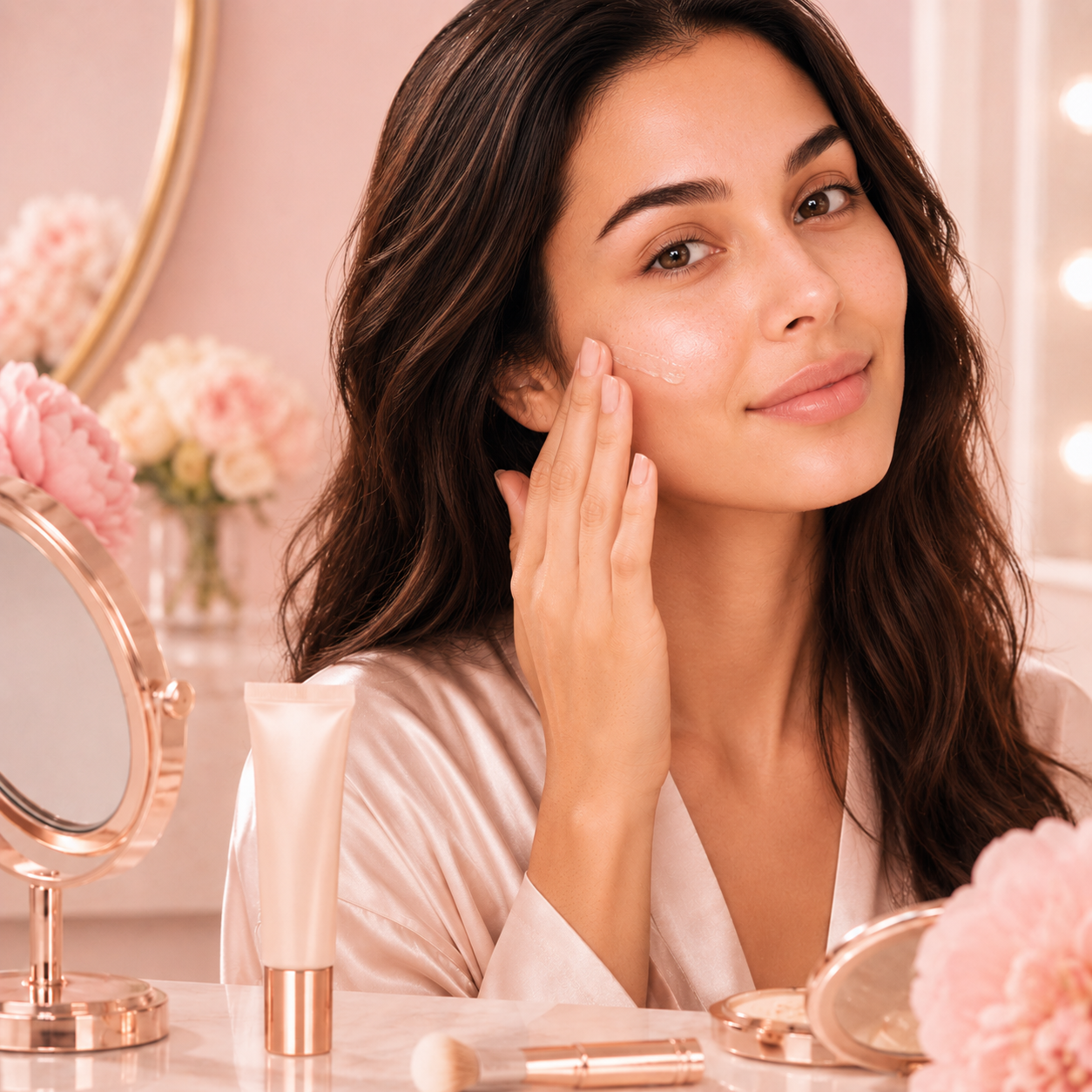
How to Apply Primer After Skin Prep
Learning how to apply primer starts with timing. Primer should be applied after your skincare has had a moment to settle. Your skin should already be clean, moisturized, and comfortable before primer touches your face. If your moisturizer, sunscreen, or skin prep is still wet and slippery, primer may not sit evenly.
Think of primer as the bridge between skincare and makeup. Skin prep helps the skin feel softer and more comfortable. Primer helps create a smoother surface for the makeup layers that come next. In Michele’s order, primer comes before the first setting spray because it needs to sit directly on the skin.
This is also why a primer tutorial image should show a bare face with no finished makeup already applied. At this point in the routine, there should be no foundation, no blush, no setting powder, no lipstick, and no completed full-face makeup. Primer is still part of the preparation stage.
If you apply primer too late, it cannot work the same way. Once foundation and powder are already on the skin, primer cannot properly grip the surface underneath. That is why this page is placed early in the tutorial cluster, before brows, eyes, concealer, foundation, contour, blush, and the rest of the full beat routine.
Why Primer Matters for a Smooth Makeup Base
Primer matters because makeup does not always behave the same way on bare skin. Some foundations cling to dry patches. Some slide around oily areas. Some settle into pores, fine lines, or uneven texture. Primer can help create a more controlled surface so the foundation and concealer have a better place to sit.
That does not mean primer is magic. It will not erase real skin texture, and it should not make the skin look like a filter. Real skin still has pores, movement, expression, and natural texture. A good primer step simply helps makeup look more polished and less patchy.
For beginners, primer can also make the makeup routine feel more organized. Instead of jumping straight from moisturizer to foundation, primer gives you a clear transition between skincare and makeup. That makes the routine easier to follow, especially when you are learning a full beat order step by step.
Primer can also help you understand your skin better. If your makeup always breaks apart around your nose, you may need less skincare there, a different primer, or a thinner foundation layer. If your cheeks look dry, you may need a hydrating primer or more careful skin prep. Paying attention to primer placement can teach you a lot about how your makeup wears.
How to Apply Primer Without Using Too Much
When learning how to apply primer, start with a small amount. A lot of beginners use too much because they think more product means more smoothing. In reality, too much primer can make foundation pill, slide, separate, or feel heavy. A thin layer is usually enough.
You can apply primer with clean fingers because the warmth of your hands helps spread the product evenly. Use gentle pressure instead of scrubbing or rubbing aggressively. Smooth the primer over the areas where makeup tends to break apart, settle, or look uneven.
Focus on the places where you need the most help. If makeup separates around the nose, apply a small amount there. If foundation settles into cheek texture, smooth a thin layer over that area. If your forehead gets shiny, you may only need primer through the center of the face.
You do not have to apply the same amount everywhere. Primer works best when it is placed intentionally. Some people need more control in the T-zone and less product on the cheeks. Others need smoothing around the mouth or hydration near dry areas. Let your actual skin needs guide the placement.
After applying primer, give it a short moment to settle before moving to setting spray. You do not need to wait a long time, but you do want the product to stop feeling slippery before the next layer. This small pause can help reduce pilling and patchiness.
Michele’s order: skin prep first, primer second, setting spray third. This keeps the routine clean and organized before brows and eyes begin.
Choosing the Right Primer for Your Skin
Part of learning how to apply primer is choosing the right type for your skin. Not every primer does the same thing. Some are made to hydrate, some are made to blur, some help grip makeup, and some help control shine. The right choice depends on what your skin needs that day.
If your skin is dry, tight, flaky, or dull, a hydrating or smoothing primer may work better than a very matte formula. A matte primer on dry skin can sometimes make foundation look heavier. It can also make texture stand out more, especially if the skin is already dehydrated.
If your skin is oily, you may prefer a shine-control primer in the areas where makeup breaks down. That does not always mean applying a mattifying primer all over the face. You can use it only on the forehead, nose, chin, or wherever you get oily fastest.
If your skin has visible pores or texture, a smoothing primer may help makeup glide more evenly. Press it gently over the areas where you want a smoother look. Avoid rubbing too hard because that can disturb skincare underneath and make the surface uneven before foundation even begins.
If you have combination skin, you may need more than one approach. The cheeks might need hydration while the center of the face needs oil control. You do not have to treat your entire face the same way. Strategic placement is often better than using one heavy layer everywhere.
Dry Skin
Dry skin usually does better with a hydrating or smoothing primer. Avoid applying too much mattifying product before foundation because that can make dry areas look heavier.
Oily Skin
Oily skin may need a shine-control primer in the center of the face. You can use it only on the T-zone instead of applying it heavily everywhere.
Textured Skin
If texture is the concern, a smoothing primer may help makeup glide better. Press it gently over texture instead of rubbing too hard.
Combination Skin
Combination skin may need different placement. You can hydrate the cheeks and use an oil-control primer only where makeup breaks down.
Common Primer Mistakes That Can Ruin a Smooth Base
One common mistake is applying primer before skincare has absorbed. If moisturizer is still sitting heavily on top of the skin, primer may not grip well. Instead of creating a smooth base, the layers may slide around or ball up when foundation is applied.
Another mistake is using too much product. A thick layer of primer can make the skin feel coated. When foundation goes on top, it may move, separate, or look uneven. A small amount placed only where needed usually gives a cleaner result.
A third mistake is using a primer that does not layer well with the foundation. Some formulas do not work together. If your foundation balls up, separates, or looks patchy, the problem may be the combination of skincare, primer, sunscreen, and foundation rather than your blending technique.
Another beginner mistake is expecting primer to replace skin prep. If the skin is dry, flaky, irritated, or overloaded with product, primer alone cannot fix everything. Skin prep still matters. Primer can help, but it works best when the skin underneath is already comfortable.
It is also easy to choose a primer based only on popularity instead of skin needs. A viral matte primer may not be right for dry skin. A very dewy primer may not be right for oily areas. Makeup works better when the product matches the problem you are actually trying to solve.
For general cosmetics safety and hygiene, you can review the FDA cosmetics safety page. Clean hands, clean tools, and fresh products matter before any makeup step.
How Primer Helps Prevent Cakey Makeup
Cakey makeup usually happens when too many layers build up, when the skin is too dry, when products do not work well together, or when powder and foundation are applied too heavily. Primer can help, but only when it is used correctly.
A thin primer layer can help foundation spread more evenly, which may reduce the need for extra product. When foundation glides better, you may not feel like you have to keep adding more to fix uneven areas. That alone can help the final look stay smoother.
Primer can also help with texture by creating a softer surface before foundation. It will not erase pores or lines completely, but it can make makeup sit a little more gracefully. The goal is not to hide every sign of real skin. The goal is to keep the base from looking heavy, dry, or broken apart.
If your makeup gets cakey, look at the whole routine. Are you using too much moisturizer? Are you applying foundation before skincare settles? Are you using a heavy primer with a heavy foundation and then adding too much powder? Sometimes the fix is not one product. Sometimes the fix is using less of everything.
That is why Michele’s routine is built in a clear order. Skin prep gets the skin ready. Primer smooths and prepares the surface. Setting spray helps the next layers settle. Then the rest of the full beat can be built with more control.
Where This Step Fits in the Full Beat Order
In Michele’s full beat routine, primer comes near the very beginning. The order is skin prep, primer, setting spray, brows, eyeshadow, eyeliner, false lashes, mascara, concealer, foundation, contour, blush, setting powder, highlighter, lip liner, lipstick, and final setting spray.
This placement matters because primer should touch the skin before makeup layers begin. Once foundation, concealer, or powder is already on the face, primer cannot do its job the same way. That is why this tutorial belongs before the setting spray tutorial and before the brow and eye steps.
Doing primer early also keeps the routine easier for beginners. You are not guessing where it belongs or trying to fix the base after makeup is already applied. You prep the skin, apply primer, let it settle, then move forward with the rest of the look.
After this step, move to setting spray before makeup, then continue through brows, eyeshadow, eyeliner, false lashes, mascara, concealer, foundation, contour, blush, setting powder, highlighter, lip liner, lipstick, and final setting spray.
Beginner Tips for a Flawless Primer Step
If you are new to this step, keep it simple. You do not need several different primers all over the face. Start with one thin layer and pay attention to how your makeup wears during the day. If one area breaks down faster than the rest, adjust placement next time.
Do not rush from skincare straight into primer if your face still feels wet. Give your skin prep a moment to settle. Then apply primer in a light layer. Then give primer a moment before setting spray. This slower order can help prevent pilling and patchiness, especially if you are layering moisturizer, sunscreen, primer, setting spray, and foundation.
Use your fingers when you want control. Fingers can help you feel how much product is going onto the skin. If the face feels slick or coated, you may have used too much. If the skin feels smooth but not slippery, that is usually a better sign.
Pay attention to your foundation after primer. If foundation looks smoother, blends easier, and wears longer, the primer is probably helping. If the foundation looks patchy or rolls up, try using less primer, giving skincare more time to settle, or switching formulas.
The best way to learn how to apply primer is to watch how your own makeup behaves. Your skin may need something different from someone else’s skin. Makeup is not one-size-fits-all, and primer is one of the steps where personal placement really matters.
Primer for Mature Skin, Dry Skin, and Texture
Primer can be helpful for mature skin, but the wrong primer can also make texture look stronger. If the skin is dry, a very matte primer may make fine lines or flaky areas more noticeable. A softer, hydrating, or smoothing option may sit better.
For mature skin, less product usually looks better than more product. A heavy primer layer, heavy foundation, and heavy powder can make the skin look dry. A thin primer layer placed only where needed can help the base look smoother without adding too much weight.
If you have texture around the cheeks, mouth, or forehead, use gentle pressure. Press primer into the area instead of dragging it around. Dragging too much product over texture can disturb skincare and make the base look uneven before foundation starts.
If you have dry patches, do not expect primer to fully hide them. Dry patches usually need better skin prep first. Primer can help foundation glide over the area, but flaky skin may still show through if the skin underneath is not properly moisturized.
This is why the routine starts with skin prep. Primer is important, but it works better when the skin underneath is cared for first. Skin prep and primer should work together, not fight each other.
How Much Primer Should Beginners Use?
Most beginners only need a pea-sized amount or even less, depending on the formula and the areas being covered. Some primers spread very easily, while others are thicker and need to be placed carefully. Start small because you can always add a little more if needed.
If you are applying primer only around the nose or forehead, you may need much less than a full pea-sized amount. If you are applying it across the whole face, spread it thinly and evenly. The goal is not to feel a thick layer sitting on top of your skin.
If your foundation slides around after primer, that may be a sign that you used too much or did not let it settle. If your foundation clings or skips, you may need a more hydrating primer or better skin prep underneath.
Primer should make your base easier, not more complicated. When the amount is right, foundation should glide more smoothly and look more even. When the amount is wrong, the whole base can feel harder to blend.
How to Apply Primer FAQ
Does primer go before or after moisturizer?
Primer goes after moisturizer. Let your skin prep settle first, then apply primer before setting spray and makeup.
Does primer go before setting spray?
Yes. In Michele’s routine, primer goes before the first setting spray. Primer touches the skin first, then setting spray comes next.
Do I need primer every time?
Not always. If your makeup sits well without it, you may not need primer daily. Use it when you want extra smoothing, grip, or oil control.
Can primer make makeup pill?
Yes. Too much skincare, too much primer, or formulas that do not layer well can cause pilling. Use thin layers and let each step settle.
Can I use primer only in certain areas?
Yes. You can place primer only where you need it, such as around the nose, on the forehead, or over textured areas.
What comes after primer?
In Michele’s full beat order, setting spray comes after primer. Then the routine moves into brows and eyes.
Final Beginner Reminder
Primer is one of those makeup steps that works best when it is simple. Use a thin layer, place it where your skin needs help, and let it settle before moving forward. Do not overload the face with product just because you want your makeup to last longer.
The real goal is a smoother base, not a heavier base. When you understand where primer goes and how little you actually need, the rest of the makeup routine becomes easier. Skin prep, primer, setting spray, and foundation all work better when each layer has a purpose.
Once you feel comfortable with this step, go back to the tutorial library and continue with the next step in Michele’s order. A full beat becomes much less overwhelming when each part is learned one at a time.
You finished this guide on how to apply primer. Go back to the main tutorial library to choose the next step in Michele’s full beat makeup order.
Back to Makeup Tutorials