
Makeup By Chele Tutorial
How to Use Setting Powder – Avoid Cakey Makeup for a Flawless Finish
How to use setting powder is one of the most important makeup steps to understand because powder can either make your makeup look smooth and finished or make it look dry, heavy, and cakey. Setting powder is helpful, but only when it is used with control.
In Michele’s full beat makeup order, setting powder comes after blush and before highlighter. By that point, the skin has already been prepped, primer has been applied, setting spray has gone on, the eyes are finished, and the face base has been built with concealer, foundation, contour, and blush.
The goal is not to cover the entire face in a thick layer of powder. The goal is to set the areas that need help, soften shine where needed, and keep the makeup from moving without making the skin look flat. On Makeup By Chele, this tutorial comes after how to apply blush and before how to apply highlighter.
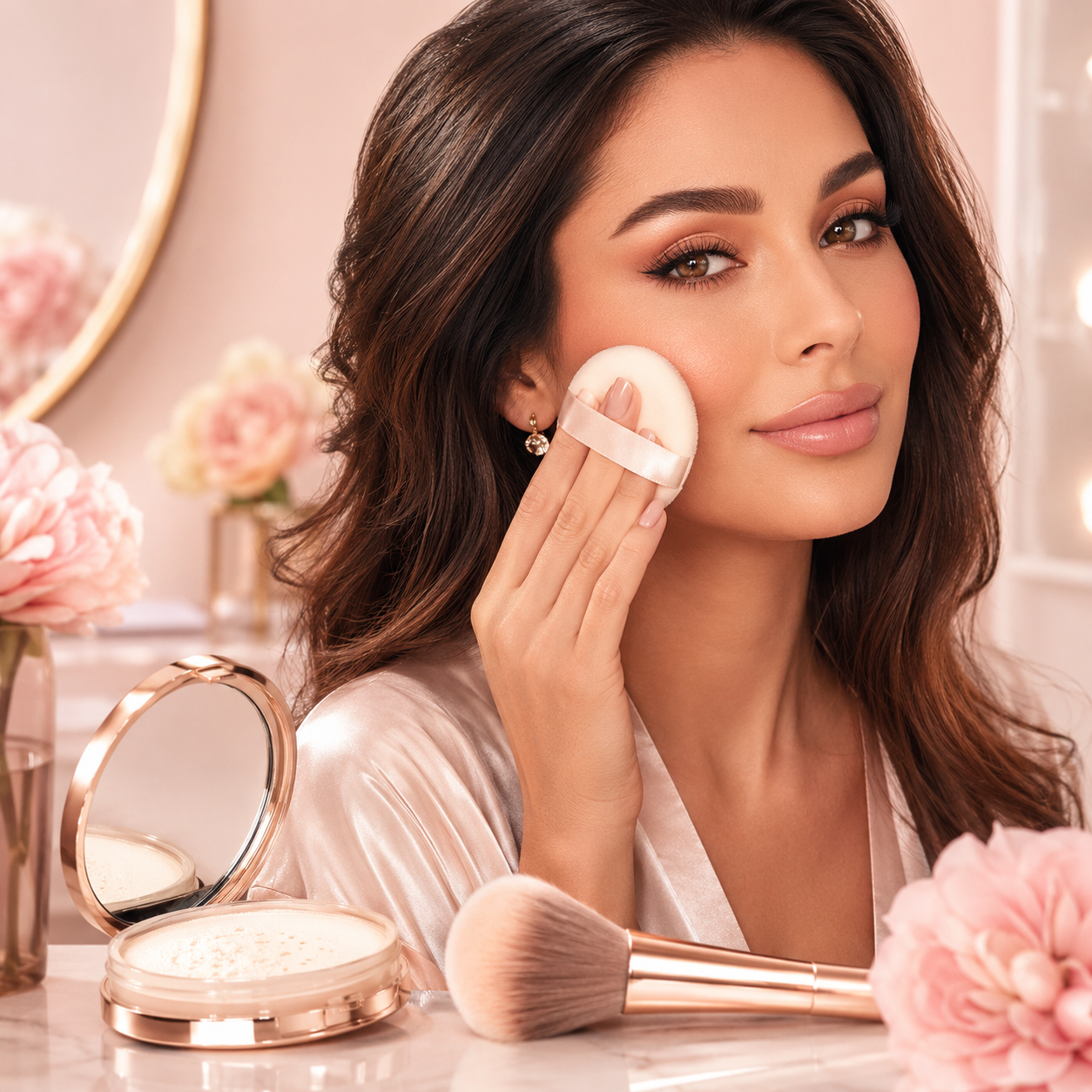
How to Use Setting Powder After Blush
Learning how to use setting powder starts with understanding where it belongs in the routine. In Michele’s full beat order, setting powder comes after blush. That means foundation, concealer, contour, and blush are already on the face before powder is used.
This placement helps the complexion look finished without taking away every bit of color and life. Foundation creates the base. Concealer brightens or corrects smaller areas. Contour adds shape. Blush brings warmth and color back into the face. Setting powder then helps lock certain areas in place before highlighter adds glow.
Many beginners are taught to powder immediately after foundation, and that can work in some routines. But in this specific full beat order, powder comes after blush because the complexion has already been built. This keeps the routine organized and makes it easier to understand what each layer is doing.
If powder is used too early or too heavily, the face can look flat before blush and highlighter have a chance to bring it back to life. If powder is skipped completely, makeup may crease, transfer, or break down faster. The goal is balance. Set what needs setting, but do not bury the whole face under powder.
What Setting Powder Actually Does
Setting powder helps absorb excess moisture and shine from cream or liquid makeup products. Foundation, concealer, cream contour, and cream blush can stay slightly tacky on the skin. That tackiness can be pretty at first, but it may also make makeup transfer, crease, or move throughout the day.
Powder helps certain areas stay in place. It can help concealer last longer under the eyes, keep foundation from sliding around the nose, soften shine on the forehead, and reduce transfer around the mouth or chin. It can also help makeup feel less sticky when you touch your face lightly.
But setting powder is not meant to erase all signs of real skin. Skin naturally has texture, pores, fine lines, and movement. A beautiful makeup look does not require the face to look frozen or overly matte. Powder should support the makeup, not make the skin look dry or lifeless.
This is why technique matters. A small amount of powder placed carefully can make makeup look polished. Too much powder placed everywhere can make even a beautiful foundation look thick, dull, or cakey. When you understand the difference, powder becomes much easier to use.
How Much Setting Powder Should Beginners Use?
When learning how to use setting powder, start with less than you think you need. Beginners often use too much because powder looks light in the container. But once it is pressed into foundation and concealer, it can build up quickly.
A light layer is usually enough. If you use a brush, tap off the excess before touching your face. If you use a puff, press the puff into the powder, then tap it on the back of your hand first. If you use a sponge, make sure the product is not sitting in a heavy clump before you press it onto the skin.
The face does not need to feel dusty. It should feel softly set. If your skin suddenly looks dull, chalky, or textured, you may have used too much. If your makeup still feels wet, sticky, or slippery, you may need a little more powder in targeted areas.
Think of setting powder as a placement product. You do not have to powder every inch of your face just because you own the product. Place it where makeup creases, moves, gets shiny, or transfers. Leave the areas that already look pretty alone.
Michele’s reminder: setting powder should help your makeup last. It should not make your skin look dry, heavy, or older than it is.
Michele’s Dry Skin Setting Powder Tip
This is one of Michele’s best professional makeup artist tips for anyone with dry skin. If you have dry skin but still need to set your makeup, use a damp sponge instead of packing dry powder onto the face with a heavy hand.
Take a damp makeup sponge, dip it lightly into your setting powder, then tap it on the back of your hand first. This step matters because it removes the excess powder before the sponge touches your face. Then gently press the powder onto the areas that need setting.
This technique can help the powder go on softer and smoother. It gives more control than applying a large amount straight from the container. It can also help dry skin avoid that heavy, dusty, cakey finish that happens when too much powder sits on top of texture.
Use this method carefully. The sponge should be damp, not soaking wet. If the sponge is too wet, it can disturb foundation or make the powder apply unevenly. The goal is a soft press, not a wet stamp. Tap on the hand first, then press onto the skin in thin layers.
Pro tip from Michele: for dry skin, use a damp sponge, dip it lightly into setting powder, tap it on the back of your hand first, then gently press it onto the skin. This helps set makeup without over-powdering.
Where to Apply Setting Powder
Part of learning how to use setting powder is knowing where to put it. The best placement depends on your skin, your makeup products, and how your face wears throughout the day. Not everyone needs powder in the same places.
The under-eye area is one of the most common places to use powder because concealer can crease there. But this area is also delicate, so it is easy to overdo it. Use a tiny amount and press lightly. If the under eyes are dry or textured, too much powder can make them look heavier.
The sides of the nose are another common area. Foundation often breaks apart around the nose because of oil, movement, glasses, allergies, or touching the face. A small amount of powder pressed around the nose can help the base stay put.
The forehead, chin, and center of the face may also need powder if those areas get shiny. But if your cheeks already look smooth and pretty, you do not have to powder them heavily. Powder only where it improves the makeup.
Under the Eyes
Use a very small amount to help concealer stay in place. Too much powder under the eyes can make the area look dry or textured.
Around the Nose
This area often breaks down first. Press a thin layer of powder around the nose if foundation tends to separate there.
Forehead and Chin
If these areas get shiny, use a light layer through the center of the face. Keep the edges softer so the base still looks natural.
Smile Lines
Use very little product near smile lines. Too much powder can collect in movement areas and make texture stand out.
Brush, Puff, or Sponge: Which Tool Should You Use?
The tool you use changes how setting powder looks on the skin. A fluffy brush gives the lightest finish. It is a good choice if you only need a soft veil of powder and do not want the face to look too matte.
A powder puff gives more control and more hold. It is helpful for areas that crease or get oily, such as under the eyes, around the nose, or through the center of the face. A puff can press powder into the makeup instead of dusting it loosely on top.
A damp sponge can be helpful for dry skin when used carefully. This is where Michele’s tip comes in. Dip the damp sponge lightly into powder, tap it on the back of the hand first, then press onto the skin. This can keep powder from looking too dry or heavy.
There is not one perfect tool for everyone. If your skin is oily, a puff may help your makeup last longer. If your skin is dry, a brush or damp sponge may give a softer finish. If you are still learning, test one tool at a time so you can see which result you like best.
Common Setting Powder Mistakes That Cause Cakey Makeup
One of the biggest mistakes is using too much powder. When a thick layer of powder sits on top of foundation, it can make the skin look dry and textured. It can also make fine lines, pores, and dry patches look more noticeable.
Another mistake is applying powder before the cream products underneath have been blended properly. Powder locks things in place. If foundation, concealer, contour, or blush is patchy before powder, the powder can set the patchiness instead of fixing it.
A third mistake is dragging powder across the face. Dragging can move foundation and disturb the layers underneath. Pressing is usually safer, especially around the nose, under the eyes, and near the mouth. A soft press helps set the area without wiping away the makeup.
Another common mistake is using the same amount of powder on every skin type. Oily skin may need more powder in the T-zone. Dry skin may need very little. Mature skin may look better with targeted powder instead of a full matte layer. The best result comes from adjusting the technique to the skin in front of you.
For general cosmetics safety and hygiene, you can review the FDA cosmetics safety page. Clean tools, clean hands, and fresh products matter when applying anything to the face.
How to Avoid a Dry or Heavy Powder Finish
To avoid a dry finish, start with good skin prep. Powder looks better when the skin underneath is already comfortable. If the skin is flaky or dehydrated before makeup begins, powder may make that texture more obvious.
Use thin layers. You can always add more powder, but it is harder to remove too much once it has settled into foundation. Tap off your brush, puff, or sponge before touching the face. If you can see a heavy pile of powder on the tool, there is probably too much.
Press instead of rubbing. Pressing helps the powder set the makeup without moving it around. Rubbing can make the base patchy, especially if foundation has not fully settled or if cream blush is still fresh.
After powder, look at the face before adding more. If the makeup already looks smooth, stop. More product is not always better. One of the best makeup skills is knowing when to leave a pretty area alone.
If the face looks too powdery, a light mist of setting spray at the end of the routine can help the layers melt together. In Michele’s full beat order, final setting spray comes after lipstick. That final spray helps soften the finished look so the makeup does not look too dry.
Setting Powder for Dry Skin
Dry skin can still use setting powder, but it usually needs a softer approach. The goal is not to make the entire face matte. The goal is to set only the areas that need help while keeping the skin comfortable and fresh.
If you have dry skin, avoid packing a thick layer of powder under the eyes or over dry patches. Those areas can quickly look crepey, heavy, or textured. Instead, use a very small amount and press lightly.
This is where Michele’s damp sponge method can help. Dip the damp sponge lightly into the powder, tap it on the back of the hand, then press it gently onto the skin. Tapping on the hand first keeps the application controlled and prevents too much powder from landing in one spot.
Dry skin may also do better with powder only in select areas. You might set the under eyes, around the nose, and maybe the chin, while leaving the cheeks softer. This keeps the makeup from moving where it needs support without taking all the life out of the skin.
If powder always looks dry on you, try using less product before you switch everything else. Sometimes the issue is not the powder itself. Sometimes it is the amount, the tool, or applying it too quickly after foundation.
Setting Powder for Oily Skin
Oily skin may need more powder than dry skin, but that still does not mean the whole face needs a thick layer. Start with the areas that get shiny first, usually the forehead, nose, chin, and sometimes the cheeks near the nose.
A powder puff can be helpful for oily areas because it presses the product into the makeup instead of lightly dusting it over the surface. Pressing can give better hold and help reduce shine longer than a loose sweep with a brush.
Even with oily skin, use thin layers. Too much powder can mix with oil later and create a heavy buildup. It is better to apply a controlled layer first, then touch up later if needed. A heavy morning powder application is not always the answer.
If your foundation breaks down even with powder, look at the whole routine. You may need less moisturizer in oily areas, a different primer, a thinner foundation layer, or better powder placement. Powder helps, but it works best when the steps underneath are also working.
Where This Step Fits in Michele’s Full Beat Order
In Michele’s full beat routine, setting powder comes after blush and before highlighter. The full order is skin prep, primer, setting spray, brows, eyeshadow, eyeliner, false lashes, mascara, concealer, foundation, contour, blush, setting powder, highlighter, lip liner, lipstick, and final setting spray.
This placement matters because the complexion has already been built before powder is used. Powder then helps secure the areas that need it, and highlighter comes after so glow can be placed on top intentionally instead of being dulled down too early.
After learning how to use setting powder, the next tutorial in the order is how to apply highlighter. You can also go back and review how to apply blush if you want to understand why powder comes after blush in this routine.
This tutorial also connects with the earlier face steps, including how to apply concealer, how to apply foundation, and how to apply contour. Each step builds on the one before it, which is why the tutorial hub is organized in order.
Beginner Tips for a Smooth Powder Finish
If you are new to powder, do not try to master every technique at once. Start by setting the areas that crease or move first. For many people, that means under the eyes, around the nose, and through the center of the face.
Use less powder than you think you need. Tap off the excess. Press instead of dragging. Look at the skin before adding more. These small habits can make a big difference in whether the finished makeup looks soft or cakey.
If your skin is dry, remember Michele’s damp sponge tip. If your skin is oily, try pressing powder with a puff through the T-zone. If your skin is mature or textured, use the smallest amount possible and avoid building too much powder in movement areas.
The best way to learn how to use setting powder is to watch how your own makeup wears. If your under eyes crease, adjust that area. If your nose breaks down, press a little more powder there. If your cheeks look dry, powder them less. Makeup should be adjusted to the face, not forced into one rule.
Once you understand powder placement, the whole makeup routine becomes easier. You stop using powder out of fear and start using it with purpose. That is when the finish begins to look smoother, softer, and more professional.
How to Use Setting Powder FAQ
Does setting powder go before or after blush?
In Michele’s full beat order, setting powder goes after blush and before highlighter. This keeps the complexion steps organized.
Can dry skin use setting powder?
Yes, but use a light hand. Michele’s damp sponge tip can help dry skin apply powder softly without making makeup look heavy.
Should I powder my whole face?
Not always. Many people only need powder under the eyes, around the nose, or through the center of the face.
Why does setting powder look cakey?
Powder can look cakey when too much is applied, when skin prep is too dry, or when makeup layers underneath are too heavy.
What tool is best for setting powder?
A brush gives a soft finish, a puff gives more control, and a damp sponge can help dry skin apply powder more gently.
What comes after setting powder?
In this routine, highlighter comes after setting powder. Then the routine moves into lip liner, lipstick, and final setting spray.
Final Reminder for a Flawless Finish
Setting powder should make makeup look smoother and help it last longer. It should not make the face look dry, flat, or overloaded. A small amount in the right place is usually better than a heavy layer everywhere.
Remember the order: blush first, then setting powder, then highlighter. This keeps the skin looking alive while still giving the makeup support. Use your tool with control, tap off the excess, and press the powder where it is actually needed.
When you understand how to use setting powder, you can set your makeup without ruining the work you already did. That is the real goal: a soft, polished finish that still looks like skin.
You finished this guide on how to use setting powder. Go back to the main tutorial library to choose the next step in Michele’s full beat makeup order.
Back to Makeup Tutorials