
Makeup for beginners can feel overwhelming at first, but it gets easier when you stop trying to buy everything and start with a few simple steps.
Makeup for Beginners
If makeup feels confusing, this guide will help you understand where to start, which products matter most, and how to build a simple routine without feeling pressured to do a full face every day.
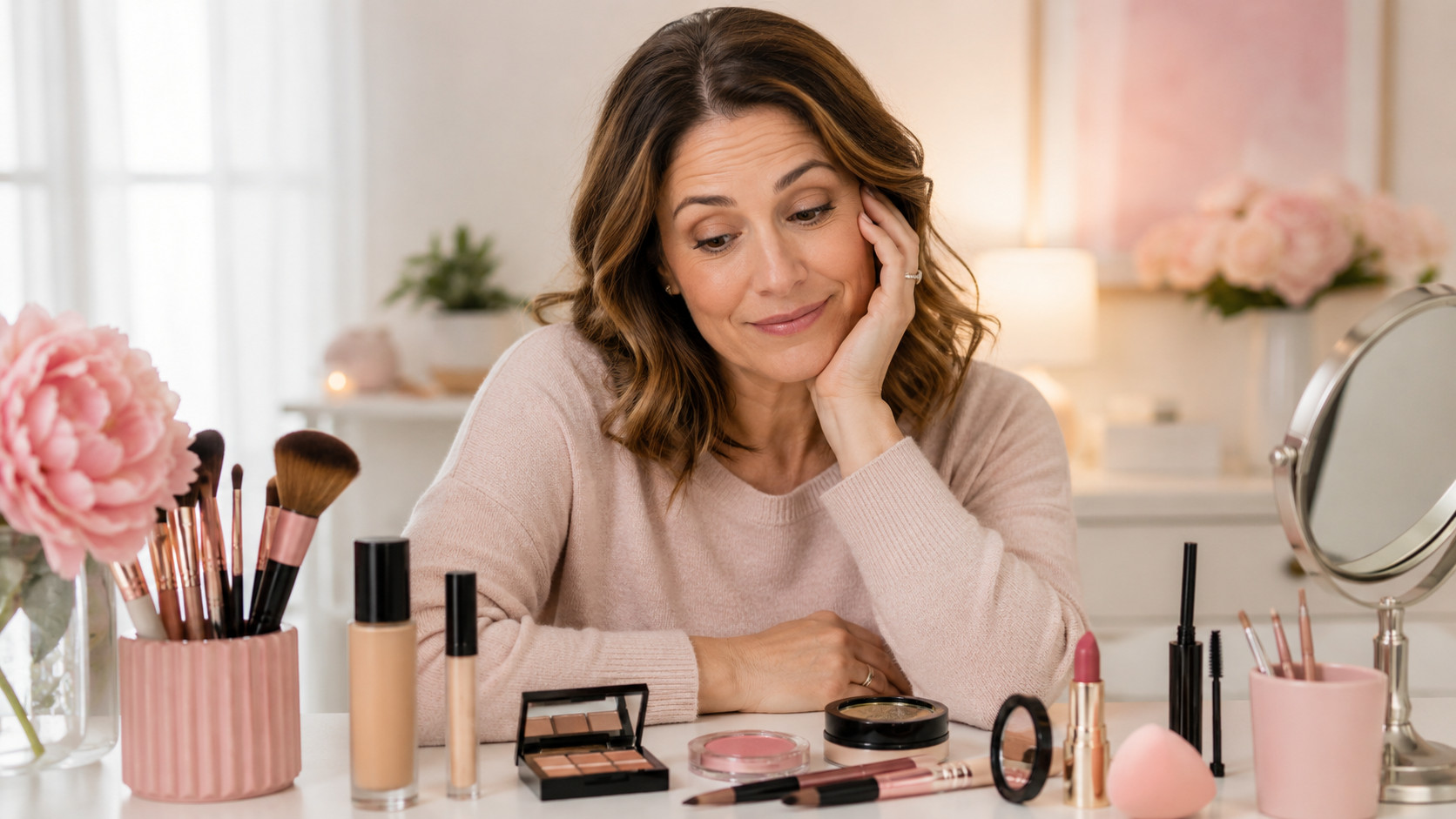
Makeup for Beginners: Start Simple, Not Perfect
Makeup for beginners should not make you feel behind, embarrassed, or like you need to understand every product on the shelf before you can begin. If you are new to makeup, coming back to makeup after years away, or simply trying to make your routine feel easier, the best thing you can do is start small.
A beginner makeup routine does not need twenty products. It does not need complicated contour, five eyeshadow shades, or a drawer full of brushes. Most women can start with a few basics: skin prep, light coverage, a little color, mascara, and a lip product that makes the face look awake.
Chele’s beginner rule
Do not start with what influencers use. Start with what your face actually needs. If your skin is dry, prep matters. If your face looks tired, blush and lips may matter more than eyeshadow. If foundation stresses you out, try lighter coverage first.
Makeup for Beginners Step 1: Prep Your Skin First
The first step in makeup for beginners is not foundation. It is skin prep. Makeup usually looks better when the skin underneath is comfortable, hydrated, and not overloaded with heavy products.
Start with clean skin, then use a lightweight moisturizer that works for your skin type. Give it a minute to settle before applying makeup. If you wear makeup during the day, sunscreen should be part of your morning routine too.
You do not need a complicated skin prep routine. For most beginners, the goal is simple: make the skin feel smooth enough that makeup can glide on instead of catching on dry patches.
Makeup for Beginners Step 2: Choose Light Coverage First
Many beginners start with full-coverage foundation because they think it will hide everything. But full coverage is often harder to apply, easier to overdo, and more likely to look heavy if the shade or formula is not right.
If you feel overwhelmed, start with a skin tint, tinted moisturizer, light foundation, or even concealer only where you need it. You can always add more coverage later, but it is harder to fix makeup once too much product is already on the skin.
- Use a small amount of product first.
- Blend from the center of the face outward.
- Use a damp sponge or soft brush if fingers feel messy.
- Only add extra coverage where redness, darkness, or uneven tone still shows.
Makeup for Beginners Step 3: Add Color Back to the Face
After foundation or concealer, the face can sometimes look flat. This is where blush becomes very helpful, especially for mature skin or anyone who feels washed out after applying base makeup.
A soft pink, rose, peach, mauve, or berry blush can bring life back to the face. The trick is not to place it too low. For a lifted look, keep blush higher on the cheek, starting around the center of the iris and sweeping upward. This keeps the face looking fresher instead of pulling the cheek downward.
You can learn more on the full guide later here: Blush Placement for Mature Faces .
Makeup for Beginners Step 4: Keep the Eyes Easy
Beginner eye makeup does not have to be complicated. If eyeshadow intimidates you, skip it at first. Mascara alone can make the eyes look more open and awake.
If you want to add a little more definition, try a soft brown pencil, a neutral shadow, or a small amount of bronzer in the crease. The goal is not a dramatic eye look. The goal is gentle definition that still feels like you.
Makeup for Beginners Step 5: Pick a Lip Color That Brings You Back to Life
Lip color can make a big difference in a beginner makeup routine. If your lipstick is too pale, too gray, or too close to your skin tone, it can make your face look washed out. A flattering lip color usually adds a little warmth, rose, berry, peach, or mauve back into the face.
You do not have to wear bold lipstick. A tinted balm, lip oil, gloss, or soft lipstick can be enough. The best beginner lip product is one you can apply without stress and wear comfortably.
If lipstick shades confuse you, this guide will help: How to Pick Lipstick Colors That Don’t Wash You Out .
A Simple Makeup for Beginners Routine
Here is a calm, simple makeup for beginners routine you can use as a starting point. You can add more later, but this is enough for many everyday looks.
Moisturizer and sunscreen during the day, then give your skin a minute to settle.
Light foundation, skin tint, or concealer only where you want a little evening out.
Blush placed higher on the cheek for a fresh, lifted look.
Mascara, a soft brow touch if needed, and a flattering lip color.
What Makeup for Beginners Does Not Need Right Away
One reason makeup feels overwhelming is because people are told they need too much. You do not need to buy everything at once. You do not need every viral product, every brush shape, or every new trend.
- You do not need a full contour routine to start.
- You do not need complicated eyeshadow palettes.
- You do not need heavy powder all over the face.
- You do not need to copy someone else’s full routine.
- You do not need perfection to look polished.
A beginner makeup routine should make your face look like you, only a little more rested, even, and confident.
Final Thoughts on Makeup for Beginners
Makeup for beginners is really about learning what helps your face the most. Start with skin prep, light coverage, blush, mascara, and a lip color that makes you feel alive. Once those steps feel easy, you can slowly add eyeshadow, liner, bronzer, or other products if you want to.
There is no rule that says makeup has to be complicated. The best routine is the one you can actually do, enjoy, and feel good wearing.
For general cosmetic safety information, you can also visit the official FDA cosmetics information page .