
Blush placement can change the whole look of your makeup because the right placement helps lift the face, soften the cheeks, and bring life back to your skin.
Blush Placement for Mature Faces: A Simple Guide
If blush ever makes your face look pulled down, too round, too bright, or uneven, the problem may not be the blush itself. It may simply be where you are placing it.
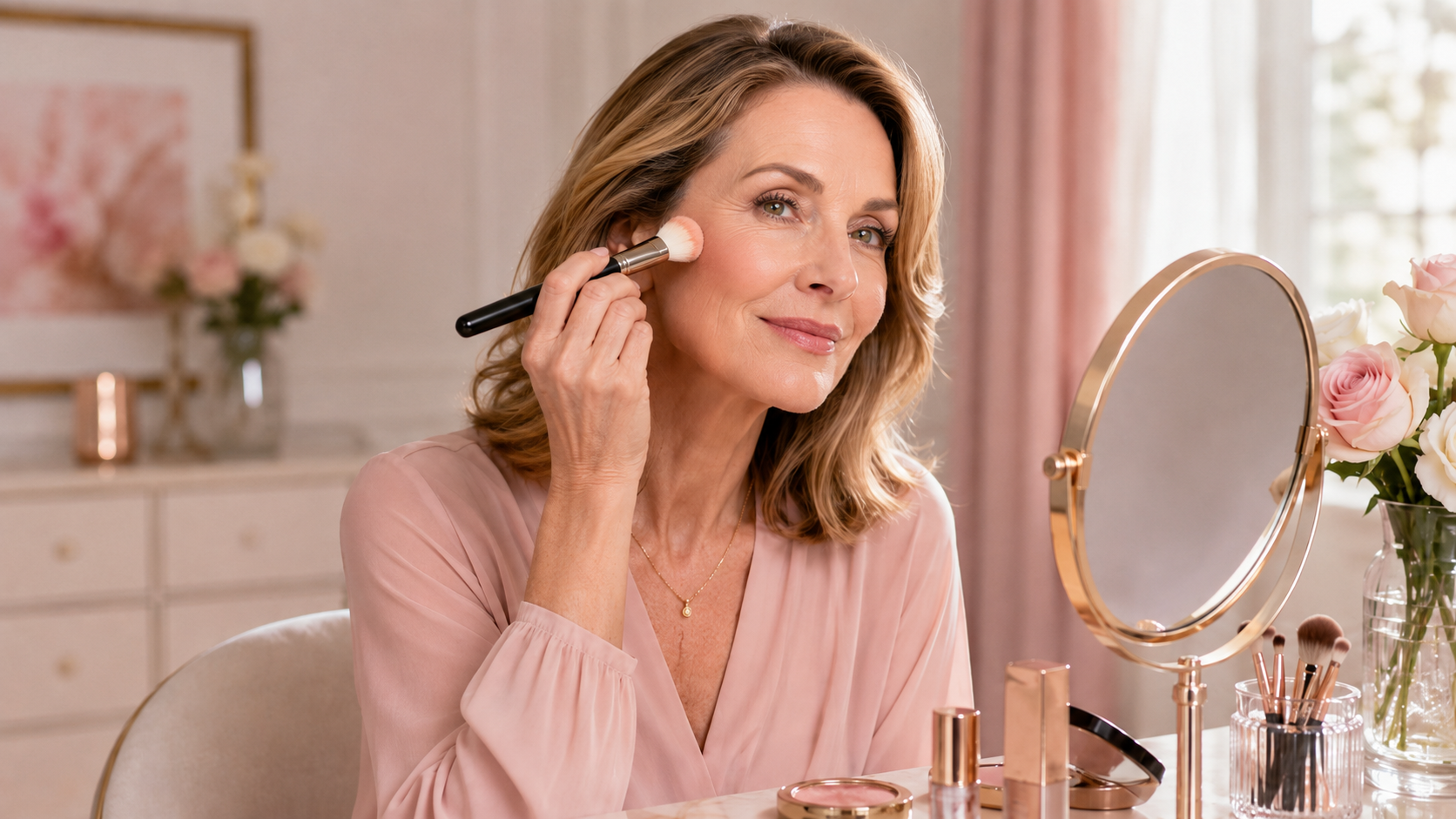
Blush Placement: Why Placement Matters More Than You Think
Blush placement is one of those small makeup details that can make a big difference, especially on mature faces. The same blush color can look fresh and lifted in one spot, but heavy or aging in another spot. That is why learning where to place blush matters just as much as choosing the right shade.
For years, many women were told to smile and put blush on the apples of the cheeks. That can work for some faces, but as skin changes, placing blush too low can make the cheek look heavier. When the blush sits low, it may pull the face downward instead of giving a lifted, healthy look.
Chele’s blush placement rule
Start the blush around the center of the iris and sweep it upward. Keep it higher on the cheek, sitting above the contour area, instead of placing it low on the apples of the cheeks.
Blush Placement Should Sit Above Contour
The easiest way to think about blush placement is this: contour creates shadow, and blush brings color. If contour goes slightly under the cheekbone to create shape, blush should sit above that area to bring softness and life back to the face.
When blush is placed directly on top of the contour or too far below the cheekbone, it can muddy the face. When it is placed just above the contour and swept upward, it looks cleaner, brighter, and more flattering.
You do not need harsh contour to use this idea. Even if you never contour, the same rule helps. Keep the blush in the upper cheek area instead of dragging it down toward the mouth.
Where to Start Your Blush Placement
A simple blush placement guide is to look straight ahead and imagine a line down from the center of your iris. That is a good starting area for blush. From there, blend the blush outward and slightly upward toward the temple.
This does not mean you need a sharp stripe. The look should still be soft and blended. The goal is a lifted wash of color that gives the cheek a fresh look without making the face appear lower or heavier.
Begin around the center of the iris instead of too close to the nose.
Sweep the blush upward and outward for a lifted effect.
Keep blush on the upper cheek area, above where contour would sit.
Use light layers so the blush looks blended, not stamped on.
Blush Placement Mistakes That Can Pull the Face Down
The most common blush mistake is placing it too low. If the blush sits close to the mouth, low on the cheek, or too far toward the center of the face, it can make the face look rounder or less lifted.
- Placing blush too low on the cheek.
- Starting blush too close to the nose.
- Blending blush downward instead of upward.
- Using too much product at once.
- Putting blush directly over heavy contour without blending.
None of this means blush has to be complicated. It simply means the direction matters. Think higher, softer, and lifted.
Choosing the Right Blush Formula
Blush placement matters, but formula matters too. Powder blush can be beautiful, but if the skin is dry or textured, too much powder can sometimes sit on top of the skin. Cream blush can look fresh and soft, but it needs to be blended well so it does not move the base underneath.
If you are new to blush or trying to refresh your routine, start with a small amount. Tap off extra powder or use a tiny amount of cream blush. You can always add more, but it is much harder to soften blush after too much has been applied.
Best Blush Shades for a Softer Look
The best blush shade depends on your skin tone, undertone, and the makeup look you want. For a soft everyday look, many women like rose, peach, soft pink, muted berry, warm nude, or mauve blush shades.
If blush looks too bright, try applying less or choosing a more muted shade. If blush disappears on your skin, choose a slightly richer tone and apply it in light layers. The goal is not a stripe of color. The goal is a healthy flush that makes the face look more awake.
Blush Placement for Everyday Makeup
For everyday makeup, blush should look like it belongs on the skin. After applying foundation or concealer, smile gently if you need to find the cheek area, but do not rely only on the apples of the cheeks. Place the blush a little higher and blend upward.
If you are doing a very simple makeup routine, blush may be one of the most important steps. It can bring warmth, softness, and shape back to the face without needing a lot of eye makeup or heavy foundation.
This is also why blush is helpful for beginners. You can learn more here: Makeup for Beginners .
Final Thoughts on Blush Placement
Blush placement does not have to be perfect, but it should be intentional. Start around the center of the iris, keep the blush above the contour area, and blend upward toward the temple. This simple change can make blush look softer, fresher, and more flattering.
The right blush placement should help your face look lifted and alive, not heavy or pulled down. Once you find the spot that works for your face, blush becomes one of the easiest ways to make everyday makeup feel pretty again.
For general cosmetic safety information, you can also visit the official FDA cosmetics information page .