
Makeup mistakes beginners make are usually easy to fix once you understand what is causing your foundation, concealer, brows, blush, or eyeliner to look heavier than you wanted.
Makeup Mistakes Beginners Make – 7 Best Fixes for a Better Look
Beginner makeup is not about being perfect. It is about learning small changes that make your makeup look smoother, softer, and more natural.
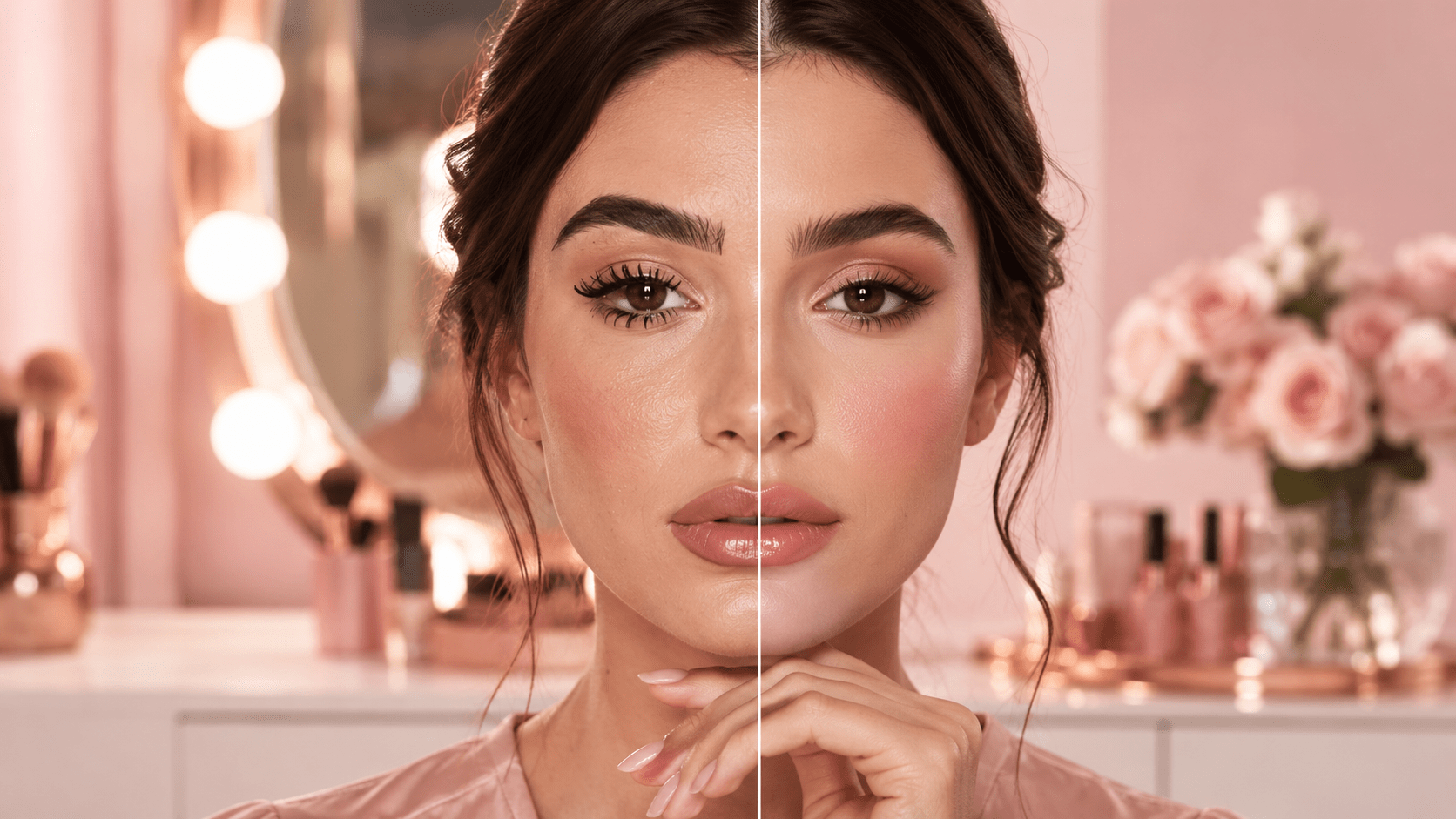
Makeup Mistakes Beginners Make: Start With Less Product
Makeup mistakes beginners make often come from using too much product too quickly. More foundation, more concealer, more powder, or more brow pencil does not always make makeup look better. Sometimes it makes the face look heavier, drier, or less blended.
The easiest fix is to start with thin layers. You can always add more, but it is harder to remove heavy makeup once it has settled into texture, lines, or dry patches.
Chele’s beginner makeup rule
When makeup starts looking wrong, do not automatically add more. Smooth what is already there first, then add only what the face truly needs.
The Best Fixes for Makeup Mistakes Beginners Make
The best fixes for makeup mistakes beginners make are usually simple. Most beginner problems come from shade matching, product amount, placement, blending, or using tools that do not fit the product.
Once you know the cause, makeup feels less frustrating. A small change in prep, placement, or blending can make your whole routine look more polished.
Use a thin layer first, then add coverage only where you need it.
Check foundation on the jawline and look at it in natural light.
Use less concealer and blend the edges before setting with powder.
Powder only the areas that crease, move, or get shiny.
Using Too Much Foundation
One of the biggest beginner mistakes is applying foundation all over the face in a thick layer. This can make makeup look cakey, especially around the nose, mouth, forehead, and cheeks.
Start with less foundation than you think. Blend it through the center of the face first, then add more only where redness, uneven tone, or discoloration still shows.
Choosing the Wrong Foundation Shade
Foundation that is too light, too dark, too pink, or too orange can make the rest of the makeup harder to balance. A good shade should blend into the face and neck without looking like a separate layer.
Test foundation near the jawline when possible. Let it sit for a few minutes, then check it in natural light because some formulas change slightly after drying down.
Applying Too Much Concealer
Concealer is helpful, but too much under the eyes can crease and look heavy. Beginners often use a large triangle of concealer when a small amount would look smoother.
Place concealer only where you need brightness or coverage, then blend the edges. Tap out creases before adding powder so you do not set the creases in place.
Using Powder the Wrong Way
Powder can help makeup last, but too much powder can make the skin look dry or textured. You do not need to powder every inch of your face unless your skin truly needs it.
Set the areas that move, crease, or get shiny. Under the eyes, around the nose, smile lines, forehead, and chin are common areas, but use a light hand.
Use tiny strokes and brush through with a spoolie to soften the brow.
Place blush higher on the cheeks and blend upward for a fresher look.
Keep liner close to the lashes so it defines without taking over the lid.
Blend edges longer before deciding you need more product.
Making Brows Too Dark or Blocky
Brow makeup can change the whole face. If the brows are too dark, too square at the front, or filled in like a solid shape, they can look harsh.
Use short, light strokes only where the brow is sparse. Brush through with a spoolie after applying product so the brows look softer and more natural.
Putting Blush Too Low
Blush placed too low can pull the face downward. For many people, blush looks fresher when it sits slightly higher on the cheek and blends upward.
Start with a small amount. It is easier to add more blush than to fix a heavy spot of color that has already been packed onto the skin.
Making Eyeliner Too Thick
Eyeliner can make the eyes look defined, but a thick line can shrink the visible lid space. This is especially true for hooded eyes or smaller lid space.
Beginners may find pencil liner easier than liquid liner. Keep the line close to the lashes, use short strokes, and soften the edge if the line looks too strong.
Forgetting to Blend the Edges
Blending is what makes makeup look finished. Foundation edges, concealer edges, blush edges, bronzer edges, eyeshadow edges, and brow product all need a little softening.
If your makeup looks harsh, step back from the mirror and check the edges. Sometimes the fix is not more product. It is more blending.
Common Beginner Makeup Mistakes
- Applying foundation too heavily instead of building thin layers.
- Skipping skin prep and blaming the foundation.
- Using concealer that is too light or too thick under the eyes.
- Powdering dry areas that do not need powder.
- Drawing brows too dark or too square.
- Using eyeliner that covers too much lid space.
How to Fix Makeup Without Starting Over
If your makeup looks too heavy, try pressing over the area with a clean damp sponge. This can lift extra product and soften texture without removing everything.
If blush or bronzer looks too strong, tap over the edge with your foundation sponge. If powder looks dry, use a light mist of setting spray and let it dry naturally.
Final Thoughts on Makeup Mistakes Beginners Make
Makeup mistakes beginners make are part of learning. Everyone has used too much foundation, picked the wrong shade, overdone powder, or made brows too strong at some point.
The good news is that most beginner makeup mistakes have simple fixes. Use thinner layers, blend the edges, choose softer placement, and make small changes one step at a time.
For general cosmetic safety information, you can also visit the official FDA cosmetics information page .