
Foundation shade matching is one of the first makeup basics to learn when you want your foundation to look natural instead of too light, too dark, orange, gray, or obvious.
Foundation Shade Matching – How to Find Your Best Match
Finding the right foundation shade gets easier when you understand undertone, lighting, where to test, and why foundation can change after it dries.
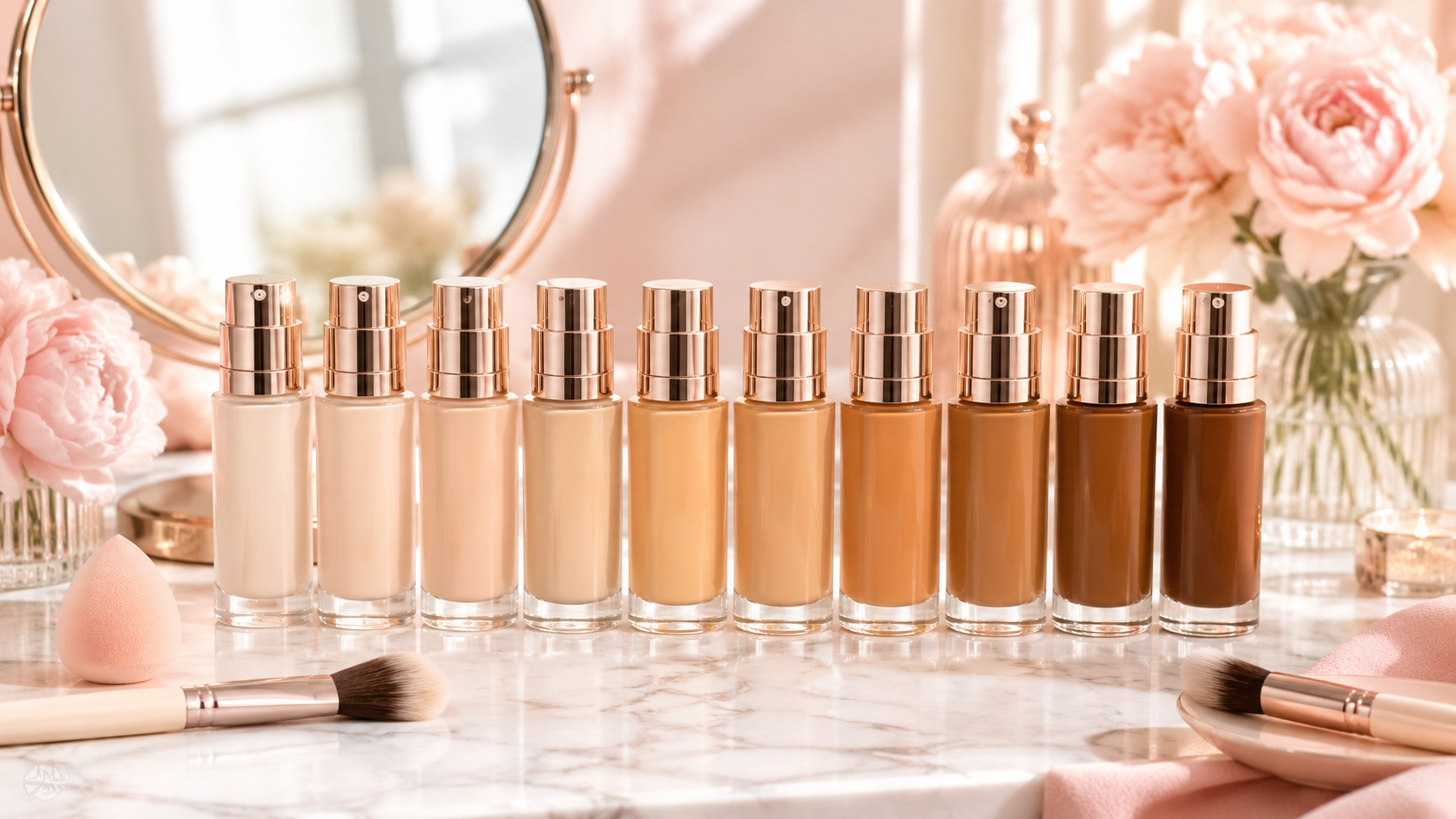
Foundation Shade Matching Starts With Your Skin Tone
Foundation shade matching can feel confusing because foundation has to match more than just “light,” “medium,” or “deep.” A good match should blend into your skin so softly that you do not see a clear line where the makeup starts and stops.
Your skin tone is the depth of your skin, while your undertone is the color underneath that depth. Two people can both be medium, but one may need a golden shade while the other may need a neutral or rosy shade. That is why choosing by the bottle alone can lead to a shade that looks wrong once it is on your face.
Chele’s shade-matching rule
Do not match foundation to your hand. Your hands are often darker, redder, or more sun-exposed than your face and neck. Match where your face, jaw, and neck need to look connected.
Foundation Shade Matching: Know Your Undertone
Undertone is one of the biggest reasons foundation can look “off.” If the shade depth is close but the undertone is wrong, the foundation may still look orange, pink, yellow, gray, or muddy.
Skin may lean pink, rosy, red, or bluish. Foundations that are too yellow can look unnatural.
Skin may lean golden, yellow, peachy, or olive. Foundations that are too pink can look separate from the neck.
Skin sits between warm and cool. Neutral foundations can help if everything else looks too yellow or too pink.
Skin may have a green, muted, or golden-gray cast. Many regular shades can look too peachy or too orange.
Where to Test Foundation Shade
The best place to test foundation is along the lower cheek and jawline, then compare it to your neck and chest area. The goal is not always to match the center of your face exactly, because the center of the face can be lighter, redder, or more discolored than the rest of your skin.
Swipe two or three close shades along your jawline. Let them sit for a few minutes, then look at them in natural light. The best shade is the one that seems to disappear without making your face look disconnected from your neck.
Check Your Foundation in Natural Light
Store lighting can trick your eyes. Bathroom lighting can also make a shade look better or worse than it really is. Natural daylight is usually the most helpful for foundation shade matching because it shows whether the color actually blends with your skin.
After applying foundation, step near a window or take a quick photo in daylight. Look at your jawline and neck. If your face looks noticeably darker, lighter, orange, pink, or gray compared to your neck, the shade or undertone probably needs adjusting.
Watch for Oxidation
Oxidation happens when foundation changes color after it sits on the skin. Some foundations dry down darker, warmer, or more orange than they looked when first applied. This is why it is smart to wait a few minutes before deciding whether a shade works.
If your foundation looks perfect at first but turns orange later, try a slightly lighter or more neutral shade. You can also test a different formula, because some products oxidize more than others.
What to Do If You Are Between Shades
If you are between two foundation shades, choose based on how you plan to wear the product. If you bronze your face, a shade that is slightly lighter may be easier to warm up. If your neck and chest are deeper than your face, a slightly warmer or deeper shade may connect everything better.
You can also mix two shades if your skin changes with the seasons. Many people are lighter in winter and deeper in summer, so one bottle may not be perfect all year long.
Foundation Shade Matching Mistakes to Avoid
- Do not choose a foundation only because it looks pretty in the bottle.
- Do not match foundation to the back of your hand.
- Do not judge the shade before it dries down.
- Do not test foundation only under yellow store lights.
- Do not use a darker foundation as a bronzer replacement.
- Do not ignore your neck, chest, and jawline when choosing a shade.
How to Make the Wrong Shade Work
Sometimes you already own a foundation that is not perfect. If it is only slightly off, you may still be able to make it work. If it is too light, add warmth with bronzer. If it is too dark, mix in a lighter foundation or use a smaller amount. If it is too orange, try balancing it with a more neutral product underneath or switch to a less warm shade next time.
If the shade is very wrong, though, it is better not to fight it. A foundation that is far too light, dark, warm, or cool can make every other makeup step harder.
Final Thoughts on Foundation Shade Matching
Foundation shade matching is not about finding a shade that looks perfect in the bottle. It is about finding the shade and undertone that makes your face, jaw, and neck look connected in real life.
Test near your jawline, check in natural light, wait for the foundation to dry down, and pay attention to undertone. Once your foundation shade looks right, the rest of your makeup usually becomes much easier.
For general cosmetic safety information, you can also visit the official FDA cosmetics information page .