
Makeup brush guide for beginners is a simple way to learn which brushes actually matter, what each one does, and which tools you can skip when you are first building your routine.
Makeup Brush Guide for Beginners – Best Brushes for an Easy Routine
This makeup brush guide for beginners keeps things simple so you can understand the basic brushes for foundation, powder, blush, eyeshadow, and an easy everyday makeup routine.
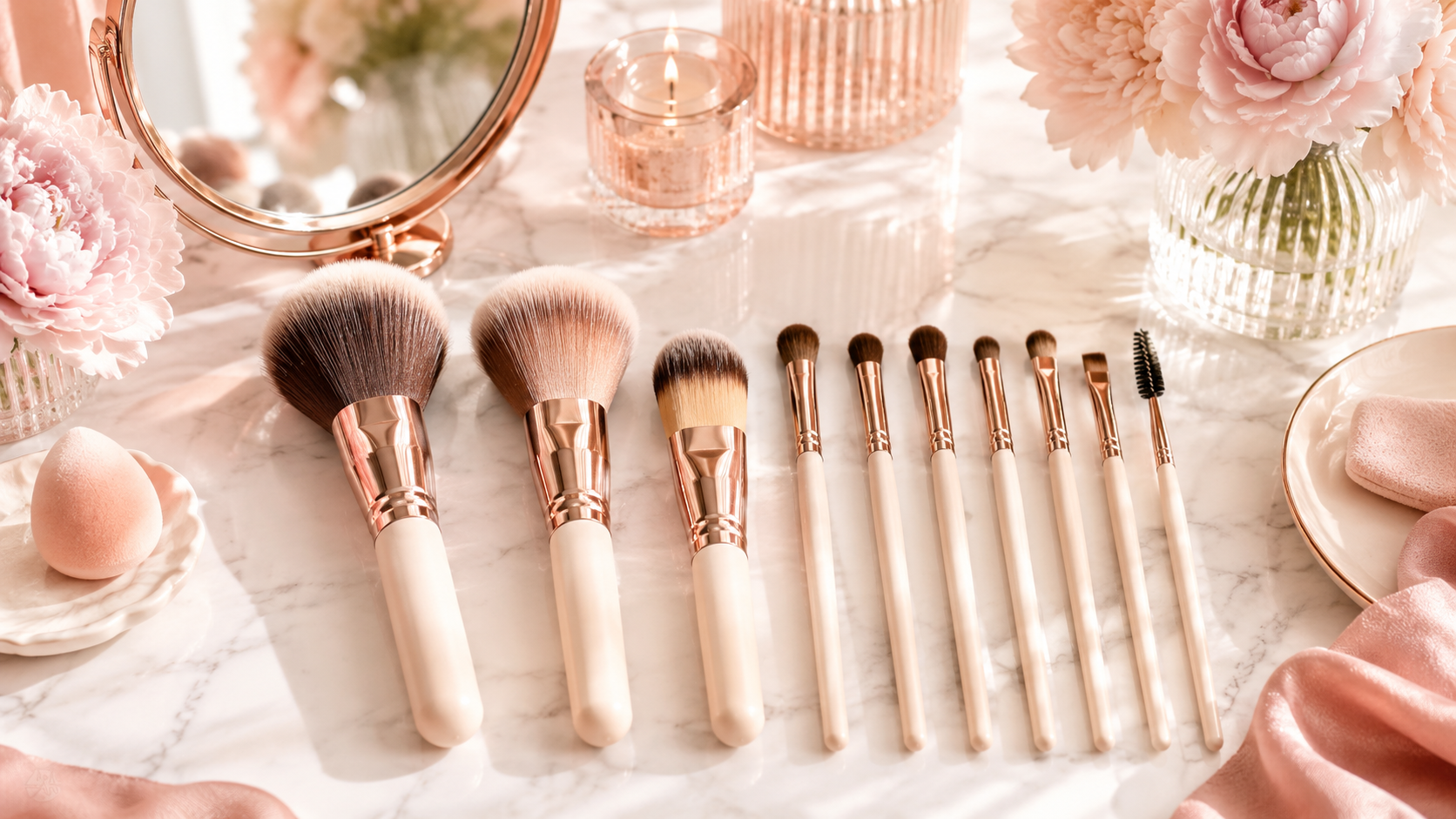
Makeup Brush Guide for Beginners: Start Simple
A makeup brush guide for beginners should make your routine feel easier, not more confusing. You do not need every brush in a giant set to create a pretty everyday makeup look. Most beginners only need a small group of useful brushes that help with the products they already wear.
The right brush should help you place product, blend it softly, and control how much makeup goes on the skin. Once you understand what each basic brush is for, it becomes much easier to decide what is worth buying.
Chele’s beginner brush rule
Do not buy a big brush set just because it looks pretty. Start with the brushes you will actually use, then add more later only if your routine needs them.
The Best Makeup Brushes for Beginners
The best beginner makeup brushes are the ones that help with the steps you already wear. If you do not wear eyeshadow, you do not need five eye brushes yet. If you mostly wear skin tint, blush, and mascara, your brush needs are very simple.
This makeup brush guide for beginners focuses on practical tools, not a huge collection. A small starter set can still help your makeup look smoother, softer, and more polished.
Helps blend liquid or cream foundation when you want more control than fingers or a sponge.
Softly sets makeup without packing on too much powder or making the face look dry.
Places blush softly on the cheeks so the color looks blended instead of harsh.
Helps place and blend neutral shadow without needing a complicated eye look.
Foundation Brush: What It Is For
A foundation brush is usually dense enough to move liquid or cream makeup across the skin. Some are flat, some are rounded, and some are angled. For beginners, a rounded or slightly angled buffing brush is usually easier than a flat paintbrush-style foundation brush.
Use small amounts of foundation and blend in thin layers. If the foundation starts looking streaky, tap over it with a sponge or use gentle circular motions to soften the edges.
Powder Brush: Why Softness Matters
A powder brush should feel soft and fluffy. The goal is not to pack powder all over the face. It is to lightly set the areas that need it, like the center of the face, under the eyes, or around the nose.
If your makeup looks dry or heavy, your brush may be picking up too much powder. Tap off the extra before applying, and use a lighter hand so the skin still looks like skin.
Blush Brush: The Brush That Makes Makeup Look Fresh
A blush brush is one of the most useful beginner brushes because blush brings life back to the face. Choose a brush that is not too large. If the brush is huge, blush can spread too low or too far.
Place blush softly on the cheek area and blend upward. The brush should diffuse the color instead of leaving one strong stripe.
Eyeshadow Brushes for Beginners
You do not need a large eye brush collection to start. A basic flat shadow brush and a soft blending brush are enough for many beginner eye looks. The flat brush places color on the lid, while the blending brush softens edges.
If eyeshadow feels overwhelming, start with one neutral shade. Sweep it lightly over the lid, then blend the edge so it does not look harsh.
Do You Need a Sponge and Brushes?
A sponge and brushes can both be useful, but they do different things. A sponge can make foundation and concealer look softer and more natural. A brush can give more coverage and control.
Many people like using a brush first and then tapping over the skin with a sponge. Try both and use what makes your makeup look best on your skin.
Brushes Beginners Can Skip at First
Beginners do not need every specialty brush. You can skip tiny detail brushes, fan brushes, several contour brushes, and large brush sets until you know what your routine actually needs.
A makeup brush guide for beginners should also tell you what not to buy yet. Extra tools can make a new routine feel more confusing than it needs to be.
- You can skip a fan brush if you do not wear highlighter often.
- You can skip multiple contour brushes if you are not contouring yet.
- You can skip tiny liner brushes if you use pencil or liquid liner.
- You can skip large sets with brushes you do not understand yet.
How to Choose Makeup Brushes Without Wasting Money
Look for brushes that feel soft, do not shed easily, and match the products you use. A fluffy brush is better for powder. A dense brush is better for cream or liquid. A smaller brush gives more control, while a larger brush covers more area.
A makeup brush guide for beginners is helpful because it reminds you that price is not the only thing that matters. You need brushes that work with your routine and feel comfortable in your hand.
Beginner Brush Routine
A simple beginner routine might use a foundation brush or sponge for the base, a small brush for concealer touch-ups, a fluffy brush for powder, a blush brush for color, and one blending brush for eyeshadow.
That is enough for most everyday makeup. Once those steps feel easy, you can add more brushes for bronzer, contour, highlighter, or detailed eye looks.
Final Thoughts on This Makeup Brush Guide for Beginners
This makeup brush guide for beginners is meant to keep your routine simple. Start with a small set of useful brushes and learn what each one does before buying more.
The best brush collection is not the biggest one. It is the one you actually use. A few soft, reliable brushes can help your makeup look smoother, fresher, and more polished without overwhelming your routine.
For general cosmetic safety information, you can also visit the official FDA cosmetics information page .