
How to clean makeup brushes is one of the easiest beauty habits to learn because clean tools help makeup apply smoother, fresher, and more evenly.
How to Clean Makeup Brushes – 7 Best Tips for Fresh Tools
Dirty brushes can hold old makeup, oil, and buildup. A simple cleaning routine keeps your tools softer, cleaner, and easier to use.
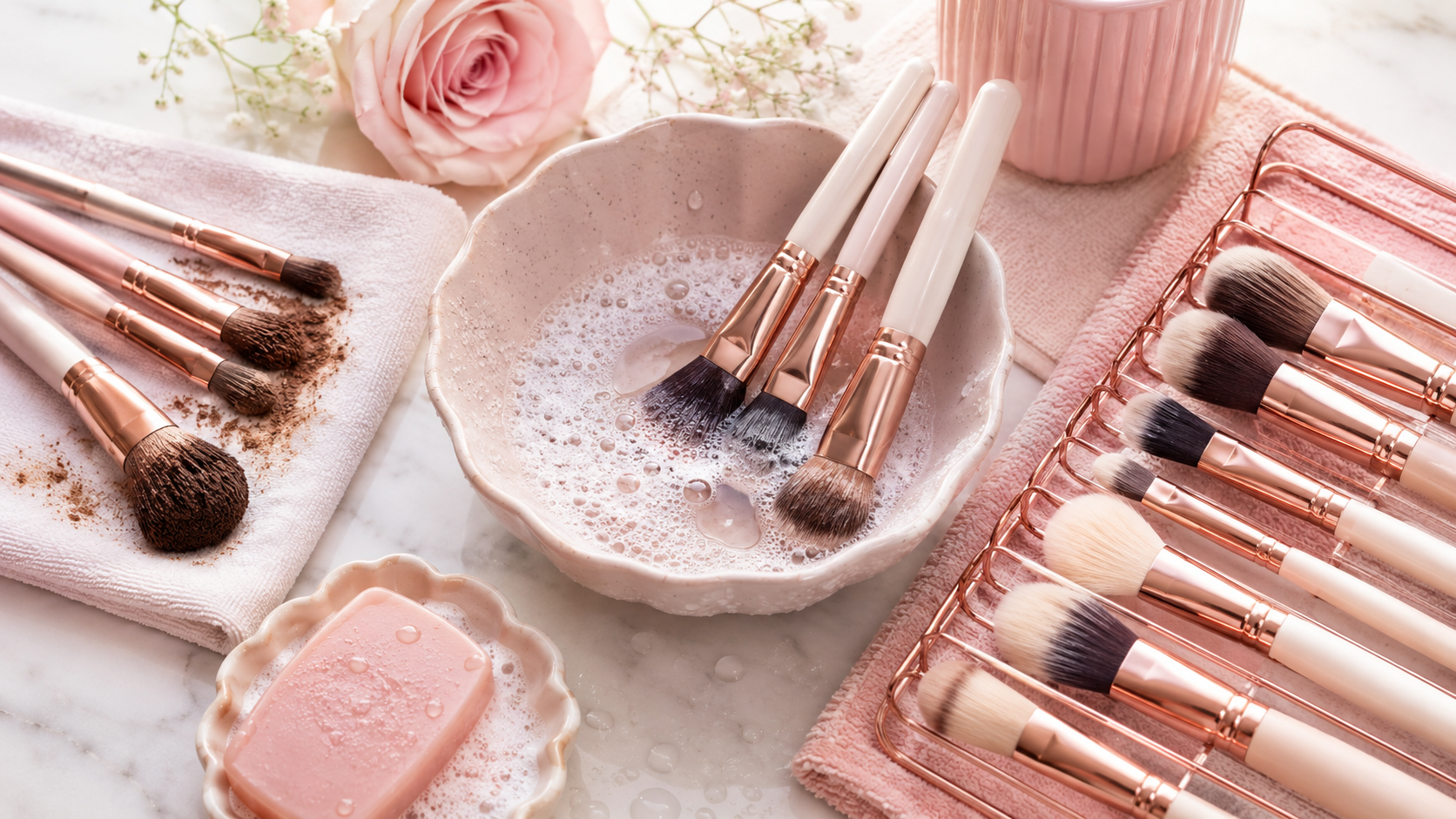
How to Clean Makeup Brushes: Start With a Gentle Wash
How to clean makeup brushes starts with using a gentle cleanser and lukewarm water. You do not need a complicated setup. A mild brush cleanser, gentle soap, or baby shampoo can help remove old makeup from the bristles without being too harsh.
The goal is to clean the bristles while protecting the brush shape. Be gentle, use small circular motions, and avoid soaking the whole brush handle.
Clean brushes can also make your makeup look better right away. Old foundation, powder, blush, and eyeshadow can build up in the bristles and change how products apply. When your brushes are fresh, color blends more evenly and your routine feels cleaner.
Chele’s brush cleaning rule
Clean the bristles, not the whole brush. Too much water near the metal part can loosen glue and shorten the life of your brushes.
The Best Way to Clean Makeup Brushes
The best way to clean makeup brushes is to wet only the bristles, add cleanser, massage gently, rinse well, squeeze out extra water, and lay the brush flat to dry.
Do not stand wet brushes upright. Water can run down into the ferrule, which is the metal part that holds the bristles. That can weaken the brush over time.
Hot water can be too harsh and may weaken the brush over time.
Use a mild soap, brush cleanser, or baby shampoo on the bristles.
Massage the bristles gently to loosen old makeup and powder.
Keep rinsing until the water runs clear and cleanser is gone.
Wash the Bristles, Not the Handle
When washing brushes, point the bristles downward or slightly downward under the water. Try not to let water run straight into the metal part of the brush.
The handle and ferrule do not need to be soaked. If the handle gets wet, wipe it off with a towel and let it dry completely before putting the brush away.
Rinse Until the Water Runs Clear
One quick rinse is usually not enough, especially for foundation, concealer, cream blush, or dark eyeshadow brushes. Keep rinsing and gently squeezing the bristles until the water looks clear.
If cleanser stays in the brush, it can make the bristles feel stiff or leave residue that affects your makeup application.
Reshape the Brush Before Drying
After rinsing, gently squeeze out extra water with a clean towel. Then shape the bristles back into their normal form before the brush dries.
This step helps the brush keep its shape and feel softer the next time you use it.
Lay Brushes Flat to Dry
Lay clean brushes flat on a towel with the bristles hanging slightly over the edge of a counter if possible. This helps air move around the bristles while keeping water away from the handle.
Do not use a hot blow dryer on your brushes. Let them air-dry fully before putting them back into a makeup bag or brush cup.
Use a towel to remove extra water without pulling the bristles.
Flat drying helps protect the glue and keep the brush shape.
Sponges used with liquid makeup need frequent washing and replacing.
Wash foundation and concealer brushes more often than powder brushes.
How Often Should You Clean Makeup Brushes?
Brushes used with liquid or cream products should be cleaned more often because they collect more product. Foundation, concealer, and cream blush brushes may need weekly washing if you use them often.
Powder brushes can sometimes go a little longer, but they still need regular cleaning. Eye brushes should be cleaned often if you switch shades or use darker colors.
If you are not sure where to start, clean the brushes that touch wet products first. Foundation, concealer, cream blush, and cream bronzer tend to leave the most buildup. Powder brushes, blush brushes, and eyeshadow brushes can still collect product, but they are usually easier to refresh between deeper washes.
Do Makeup Sponges Need Cleaning Too?
Yes, makeup sponges need cleaning too. Sponges absorb liquid products, so they can hold buildup quickly. Wash them with gentle soap, rinse until the water runs clear, and squeeze out extra water.
Let sponges dry fully in an open area. Do not store a damp sponge inside a closed makeup bag.
Common Brush Cleaning Mistakes
- Soaking the whole brush in water.
- Using water that is too hot.
- Leaving cleanser inside the bristles.
- Standing wet brushes upright to dry.
- Scrubbing so hard that bristles lose shape.
- Putting damp brushes back into a bag or drawer.
How to Keep Brushes Fresh Between Washes
Between deep washes, wipe brushes on a clean towel or use a quick brush spray if you need to switch colors. This is helpful for eyeshadow brushes and blush brushes.
Learning how to clean makeup brushes also means keeping them stored properly. Keep clean brushes away from loose powder, dust, and damp areas.
Final Thoughts on How to Clean Makeup Brushes
How to clean makeup brushes does not have to be hard. Use gentle cleanser, lukewarm water, soft pressure, careful rinsing, and flat drying.
Clean brushes feel better, blend better, and help your makeup look fresher. Once you make brush cleaning part of your routine, your tools will be easier to use and easier to love.
For general cosmetic safety information, you can also visit the official FDA cosmetics information page .