
Cakey makeup usually happens when skin prep, foundation, powder, or product layers are not working together smoothly.
Cakey Makeup – How to Fix It
If your foundation looks thick, dry, patchy, textured, or heavy by the time you finish your makeup, you are not alone. Most cakey makeup problems can be fixed with a few simple changes.
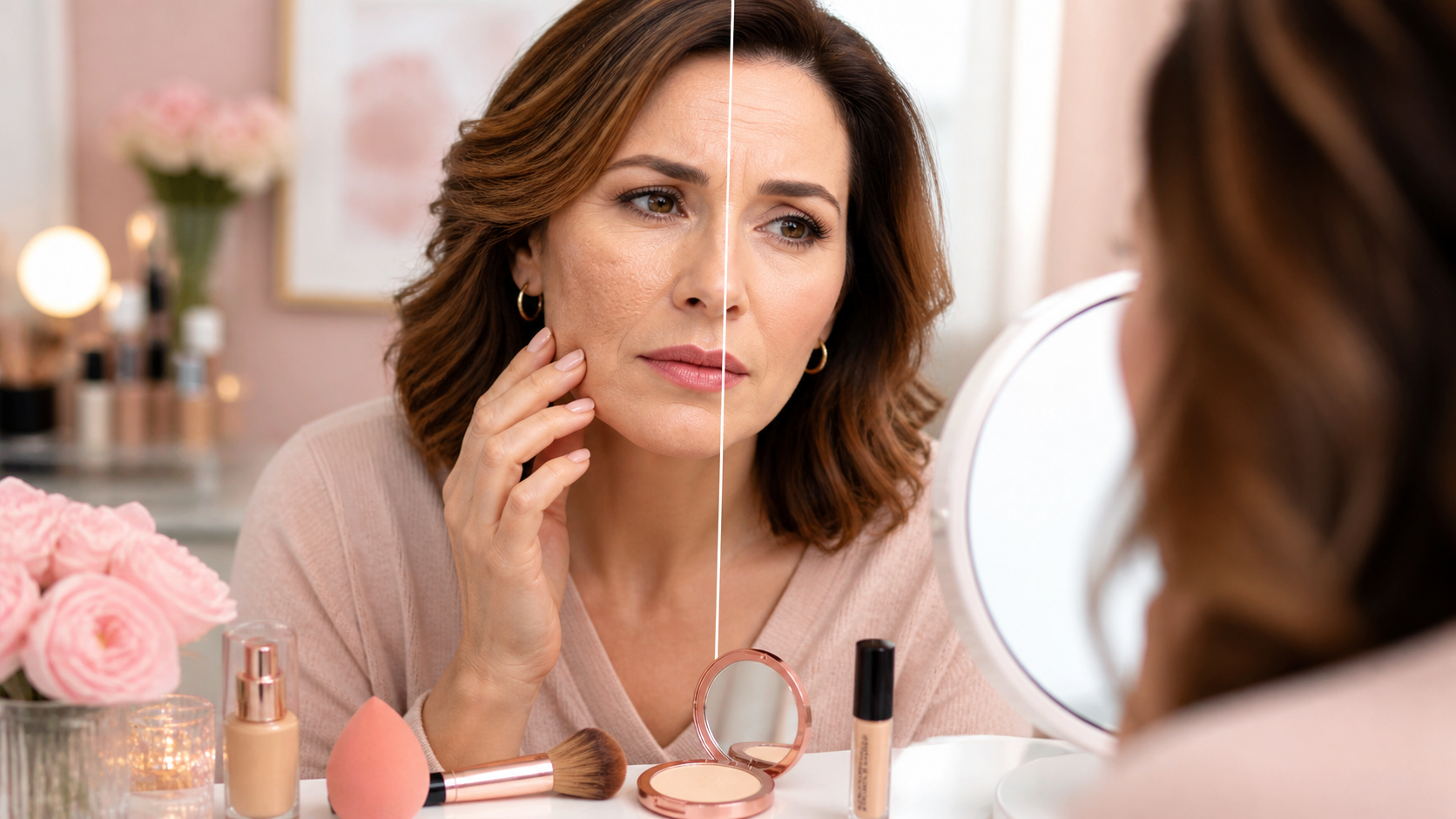
Cakey Makeup: Why It Happens
Cakey makeup does not always mean you are doing everything wrong. It usually means something in the routine is too dry, too heavy, too layered, or not blended well enough for your skin that day. Foundation can look cakey when it sits on top of dry skin, clings to texture, mixes poorly with skincare, or gets overloaded with powder.
The good news is that cakey makeup is usually fixable. You may not need a new foundation. Sometimes the answer is using less product, giving your skincare more time to settle, changing how you apply powder, or using thinner layers instead of one heavy layer.
Chele’s cakey makeup rule
If your makeup looks cakey, do not keep adding more product to fix it. Step back and look at skin prep, product amount, blending, and powder placement first.
Cakey Makeup Can Start With Dry Skin
Dry skin is one of the biggest reasons foundation looks cakey. When skin has dry patches or rough texture, makeup can grab onto those areas and make them look more noticeable. The foundation may look smooth at first, but after a few minutes it can settle, crack, or cling.
Before foundation, use a moisturizer that fits your skin type. If your skin is very dry, you may need a richer moisturizer. If your skin is oily but dehydrated, you may need lightweight hydration instead of heavy cream. The goal is not greasy skin. The goal is comfortable skin that makeup can sit on smoothly.
Cakey Makeup Can Happen When You Use Too Much Foundation
More foundation does not always mean better coverage. Too much foundation can build up around the nose, smile lines, chin, forehead, and textured areas. This can make makeup look thick instead of smooth.
Try using less foundation than you think you need. Start in the center of the face where redness or uneven tone usually shows most, then blend outward. After that, add a tiny amount only where you still need coverage.
Start with a thin layer of foundation instead of covering the whole face heavily.
Add coverage only where you need it after the first layer is blended.
Use a damp sponge, soft brush, or clean fingers to press and smooth the product.
If texture shows more, stop adding foundation and soften with a sponge instead.
Cakey Makeup and Powder Mistakes
Powder can help set makeup, but too much powder can make makeup look dry, flat, and heavy. This is especially true if the skin already has dryness, fine lines, or texture. Powder should be used where you need it, not always packed over the whole face.
Try applying powder only in areas that crease, move, or get shiny. For many women, that may be under the eyes, around the nose, the center of the forehead, or the chin. Use a light hand and avoid pressing powder heavily over areas where the skin already looks dry.
Cakey Makeup Can Come From Products That Do Not Mix
Sometimes makeup looks cakey because skincare and foundation do not work well together. If a moisturizer, sunscreen, primer, and foundation all have different textures, they may pill, separate, or sit unevenly on the skin.
Let skincare settle before applying foundation. If your products roll up or look patchy, try using fewer layers under makeup. You can also test whether your foundation looks better over moisturizer only, without primer, or with a different sunscreen.
How to Fix Cakey Makeup After It Happens
If your makeup already looks cakey, do not immediately add more foundation. First, press over the cakey area with a clean damp sponge. This can lift extra product and soften texture. If the area is dry, a tiny amount of moisturizer on the back of your hand can be tapped over the area with a sponge, but use very little.
If powder made the makeup look too dry, a light mist can sometimes help soften the look. The key is not to soak the face. You only want to relax the powdery finish so the makeup looks more skin-like.
- Press with a damp sponge instead of rubbing.
- Remove extra product before adding more.
- Use less powder next time.
- Let skincare settle before foundation.
- Use thinner layers and build only where needed.
Cakey Makeup Around Fine Lines
Makeup can look cakey around fine lines when too much foundation or concealer settles into the area. This often happens under the eyes, around the mouth, and near smile lines. Using less product in these areas can help more than using extra coverage.
Apply a small amount, blend well, and then set lightly only if needed. If the area is dry, heavy powder can make lines more visible. For mature skin, thinner layers usually look softer than a thick full-coverage application.
If you are building a simple routine and want to avoid heavy makeup from the start, this guide may help: Makeup for Beginners .
Final Thoughts on Cakey Makeup
Cakey makeup is usually a sign that the skin needs better prep, less product, lighter powder, or more careful blending. You do not need to throw away your entire makeup bag. Start by using thinner layers, keeping dry areas moisturized, and only powdering where you truly need it.
Makeup should look soft and comfortable on the skin. When you stop layering too much product and start working with your skin instead of fighting it, foundation usually looks smoother, fresher, and more natural.
For general cosmetic safety information, you can also visit the official FDA cosmetics information page .