
Makeup dos and don’ts can help beginners avoid common makeup mistakes and build a smoother, easier beauty routine.
Makeup Dos and Don’ts for Beginners
Makeup dos and don’ts are helpful when you are learning how to apply makeup without feeling overwhelmed. Makeup should feel fun, confidence-building, and wearable, but small mistakes can make products look patchy, heavy, uneven, cakey, or harder to blend.
This Makeup By Chele guide explains simple makeup dos and don’ts for beginners, including skin prep, foundation, concealer, powder, blush, bronzer, mascara, brows, lips, product buying, and the beauty habits that make makeup easier to wear in real life.
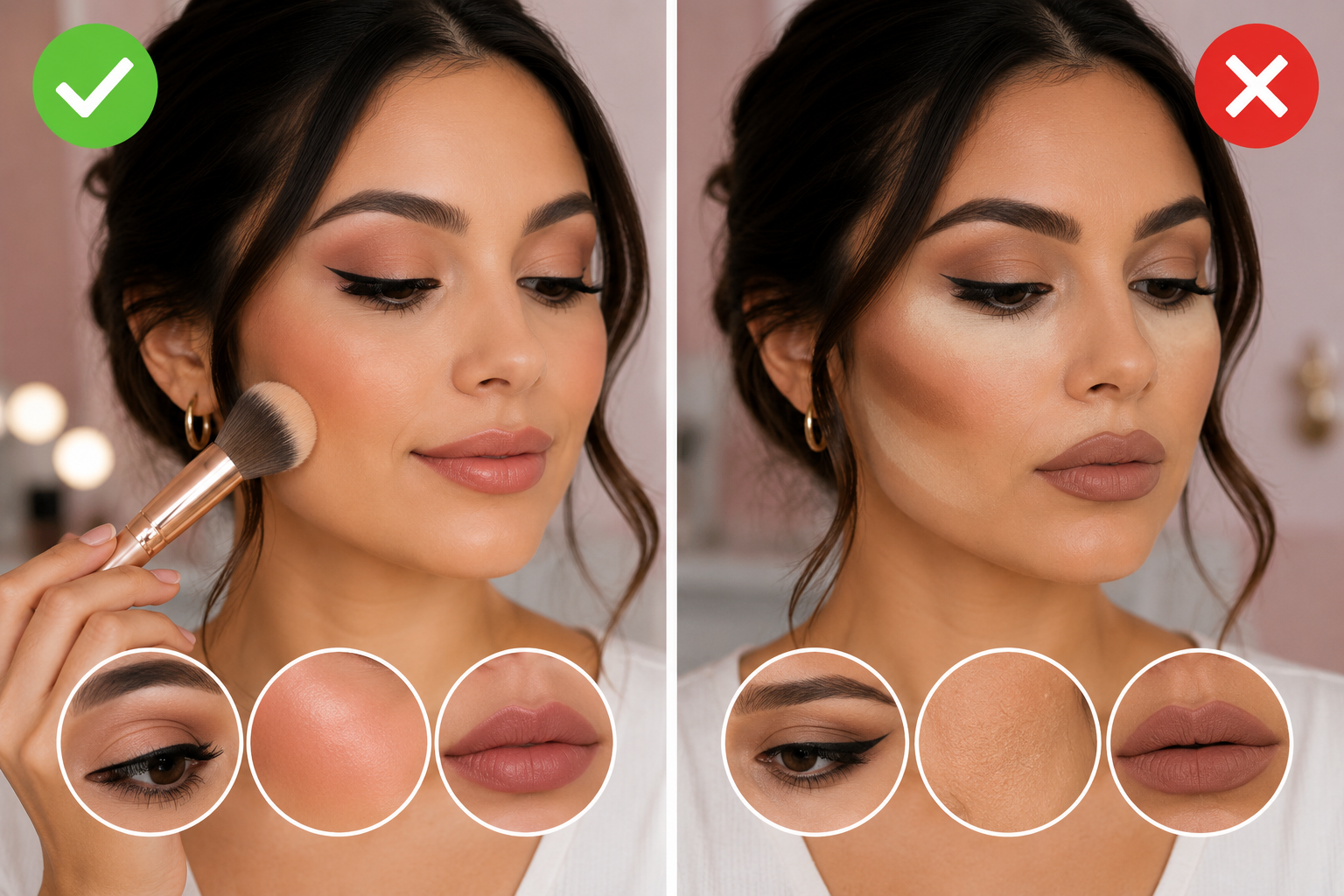
Makeup dos and don’ts for beginner beauty routines
Makeup dos and don’ts are not about making beauty feel strict. They are about helping beginners avoid the little mistakes that make makeup harder than it needs to be. A beginner routine should feel simple, repeatable, and easy to adjust.
The best beginner makeup routine usually starts with clean skin, light layers, soft blending, and products that match your real life. You do not need to copy every trend, buy every viral product, or wear a full face every day to look polished.
A smart beginner routine is built one step at a time. Learn skin prep first, then base makeup, then color, then eyes, brows, and lips. This keeps makeup from feeling like too much at once.
Makeup Dos and Don’ts Start Before Foundation
The most important makeup dos and don’ts start before makeup even touches your face. Skin prep can change how foundation, concealer, powder, blush, and bronzer sit on the skin. If your skin feels dry, greasy, tight, irritated, or overloaded, makeup may not apply smoothly no matter how expensive the product is.
Beginner makeup often goes wrong because the skin underneath is not ready. Foundation can cling to dry patches, concealer can crease, powder can look chalky, and blush can look uneven. Proper prep does not have to mean a long routine. It just means giving your skin what it needs before makeup.
Do:
- Cleanse or rinse your face if your skin needs it.
- Use a moisturizer that works for your skin type.
- Apply sunscreen during daytime makeup routines.
- Let skincare settle before applying makeup.
- Use light layers so products do not pill.
Don’t:
- Apply makeup over leftover makeup from the day before.
- Use too many skincare layers right before foundation.
- Skip moisturizer just because your skin is oily.
- Rub products too hard and cause pilling.
- Use a heavy cream under makeup if it makes your foundation slide.
For a deeper routine, read Proper Skin Prep Before Makeup.
Beginner tip: if your makeup keeps separating or clinging, check your skin prep before blaming the foundation.
Foundation and Concealer Makeup Dos and Don’ts
Foundation and concealer are where many beginners use too much product too fast. One of the best makeup dos and don’ts is to start with thin layers. A light layer can even the skin without hiding your natural face, and it is much easier to add more than to remove too much.
Concealer does not need to cover every inch of the face. It works best when used where you want extra help: under the eyes, around the nose, on redness, or on specific spots. When foundation and concealer are used together in thin layers, makeup usually looks softer and more natural.
Do:
- Start with a small amount of foundation or skin tint.
- Blend in thin layers instead of one heavy layer.
- Use concealer only where you want extra coverage.
- Match your foundation as closely as possible to your skin tone.
- Check your base makeup in natural light when possible.
Don’t:
- Use foundation as a mask over the entire face if you only need light coverage.
- Apply thick concealer under the eyes without blending carefully.
- Keep adding product before checking how the makeup looks from a normal distance.
- Choose a shade just because it looks pretty in the bottle.
- Forget to blend foundation into the jawline.
Makeup artist tip: thin layers usually look more natural and are easier to fix than one heavy layer.
Powder Makeup Dos and Don’ts
Powder can make makeup last longer, but too much powder can make the skin look dry, flat, or cakey. Beginners often powder the whole face because they think it is required. In real life, powder should be placed where you actually need it.
If your skin is dry, powder can grab onto texture. If your skin is oily, powder can help control shine, but it should still be applied in thin layers. The goal is to set makeup, not bury it.
Do:
- Use powder only where you get shiny or where makeup creases.
- Tap off extra powder before applying it to the face.
- Use a small brush for targeted powder placement.
- Press powder gently instead of dragging it across the skin.
Don’t:
- Powder your whole face heavily if only your T-zone gets oily.
- Keep layering powder when the issue is dry skin underneath.
- Use too much powder under the eyes if it makes lines look stronger.
- Assume every beginner needs baking or heavy setting powder.
Powder is helpful when it is controlled. It becomes a problem when it is used to fix every makeup issue.
Blush, Bronzer, and Highlighter Makeup Dos and Don’ts
Blush, bronzer, and highlighter can bring life back to the face after foundation. These products help the skin look less flat, but they need soft placement and careful blending. One of the most useful makeup dos and don’ts for beginners is to start with less color than you think you need.
Do
Tap off extra product, smile softly to find placement, and blend blush upward so the face looks lifted and fresh.
Don’t
Apply blush too low, use harsh bronzer stripes, or put highlighter on texture you do not want to emphasize.
Helpful beginner tips:
- Start with a small amount of blush and build slowly.
- Blend bronzer around the outer face, not in harsh lines.
- Use highlighter lightly if you want glow.
- Check both sides of the face before adding more color.
Eye Makeup Dos and Don’ts for Beginners
Eye makeup can be intimidating, but it does not have to be dramatic to look pretty. Beginners do not need a cut crease, winged liner, false lashes, or five eyeshadow shades to look polished. Simple eye makeup can still make the eyes look more awake.
Do:
- Start with neutral shades if you are learning eyeshadow.
- Use mascara carefully and avoid pumping the wand.
- Comb through brows before adding product.
- Practice eyeliner slowly if you choose to use it.
- Use one light shimmer shade on the lid for an easy beginner look.
Don’t:
- Use very dark eyeshadow before learning how to blend.
- Apply mascara in thick clumps.
- Overdraw brows too harshly.
- Feel like you must wear eyeliner every day.
- Try complicated looks before you feel comfortable with basic blending.
A beginner eye look can be as simple as mascara, soft brows, and one eyeshadow shade. That is still makeup, and it still counts.
Brow Makeup Dos and Don’ts
Brows frame the face, but they can quickly look too heavy if a beginner uses too much pencil or pomade. The best beginner brow routine usually starts with brushing the brows upward and seeing where the sparse areas actually are.
Do:
- Brush brows before filling them in.
- Use light, hair-like strokes.
- Fill only sparse areas instead of drawing a whole new brow.
- Use brow gel if your brows need hold.
Don’t:
- Press too hard with a brow pencil.
- Make the front of the brow too dark or square.
- Use a shade that is much too warm or too dark.
- Forget to blend with a spoolie.
Brow stencils can also help beginners who struggle with shape, placement, or symmetry. They are not required, but they can be a useful tool while learning.
Lip Makeup Dos and Don’ts
Lip products can finish a makeup look without making the routine complicated. Beginners can start with tinted balm, gloss, lip liner, or a soft lipstick. The easiest lip look is one that feels comfortable and does not require constant checking.
Do:
- Use lip balm if your lips are dry before lipstick.
- Choose beginner-friendly shades close to your natural lip color.
- Use lip liner softly if you want more shape.
- Blot lipstick if it feels too strong.
Don’t:
- Apply matte lipstick over cracked lips without prep.
- Overline too far outside the natural lip shape.
- Choose a bold shade on a day you do not want maintenance.
- Forget to check lipstick on teeth before leaving.
Makeup Dos and Don’ts for Product Buying
Makeup dos and don’ts also apply to shopping. It is easy to feel like you need every trending product, but most beginners do better with a small makeup kit that is easy to understand and repeat. Buying too much too fast can make makeup feel more confusing.
Do:
- Start with products you will actually use.
- Choose shades that work for everyday life.
- Buy one new product at a time when possible.
- Learn each product before adding more.
- Pay attention to your skin type before buying base products.
Don’t:
- Buy a full routine before knowing your skin type or style.
- Assume expensive makeup always works better.
- Copy every viral routine without considering your own face.
- Keep products that irritate your skin or eyes.
- Buy products only because the packaging looks pretty.
You can also read What You Need to Start Using Makeup for a simpler beginner makeup checklist.
Cosmetic Safety and Makeup Dos and Don’ts
Cosmetic safety is part of smart makeup dos and don’ts. Beginners should pay attention to how products feel on the skin, how old the product is, and whether the makeup causes itching, burning, watering eyes, or redness.
Makeup should not be shared around the eyes, old mascara should be replaced, and products that smell strange or change texture should not be used. If a product causes a strong reaction, stop using it and keep the routine simple until the skin feels normal again.
For general cosmetic safety information, visit the official FDA cosmetics information page.
Makeup Dos and Don’ts: Quick Beginner Checklist
These quick makeup dos and don’ts are easy to remember when you are practicing. You do not have to master every technique at once. Start with the habits that make makeup look cleaner, softer, and easier to wear.
Do:
- Do prep your skin before makeup.
- Do use thin layers of foundation and concealer.
- Do blend edges carefully.
- Do start with simple everyday products.
- Do clean your brushes and sponges regularly.
- Do check your makeup in different lighting.
- Do give yourself time to practice.
Don’t:
- Don’t overload the face with too much product.
- Don’t skip moisturizer before makeup.
- Don’t copy advanced tutorials before learning basics.
- Don’t rush blending when you are still learning.
- Don’t keep using products that burn or irritate.
- Don’t compare your beginner makeup to filtered videos.
If you want a full beginner routine, visit Simple Makeup Routines for Beginners.
Makeup Dos and Don’ts FAQ
What is the biggest makeup mistake beginners make?
One of the biggest beginner makeup mistakes is using too much product too quickly. Thin layers are easier to blend, easier to fix, and usually look more natural.
Should beginners use primer?
Beginners do not always need primer. If your moisturizer and sunscreen work well under makeup, primer can be optional. Primer may help if you have shine, texture, or makeup that fades quickly.
How can beginners make makeup look more natural?
Beginners can make makeup look more natural by prepping the skin, using light coverage, blending edges well, choosing softer colors, and avoiding too much powder.
Do I need expensive makeup to get good results?
No. Good results come from choosing products that match your skin, using the right amount, and learning simple techniques. Expensive makeup can be nice, but it is not required.
How long does it take to get better at makeup?
Makeup gets easier with practice. Most beginners improve faster when they repeat one simple routine instead of changing products and techniques every day.
Final Thoughts on Makeup Dos and Don’ts
Makeup dos and don’ts are not meant to make beauty feel strict. They are meant to make makeup easier. Once you understand skin prep, thin layers, soft blending, simple eye makeup, natural brows, and smart product buying, your routine starts to feel less overwhelming.
The best beginner makeup routine is not the most complicated one. It is the one you can repeat, adjust, and enjoy. Start small, build slowly, and remember that makeup is a skill. You are allowed to learn it one step at a time.