Makeup By Chele Video Tutorial
Full Beat With Underpainting – Powerful Soft Glam Makeup Tutorial
Full beat with underpainting is a makeup technique that can make a glam look feel softer, smoother, and more blended. Instead of putting every contour, blush, and brightening step on top of foundation, underpainting places those shaping and brightening steps underneath the complexion layer.
This tutorial is for anyone who wants a full beat makeup look without harsh stripes, muddy contour, or makeup that feels too heavy. The goal is still polished glam, but with a softer finish that looks more seamless on camera and in person.
If you are learning makeup over 40 or makeup over 50, this style can be especially helpful because it lets you add brightness, shape, and color without making the face look overly powdered or overworked.
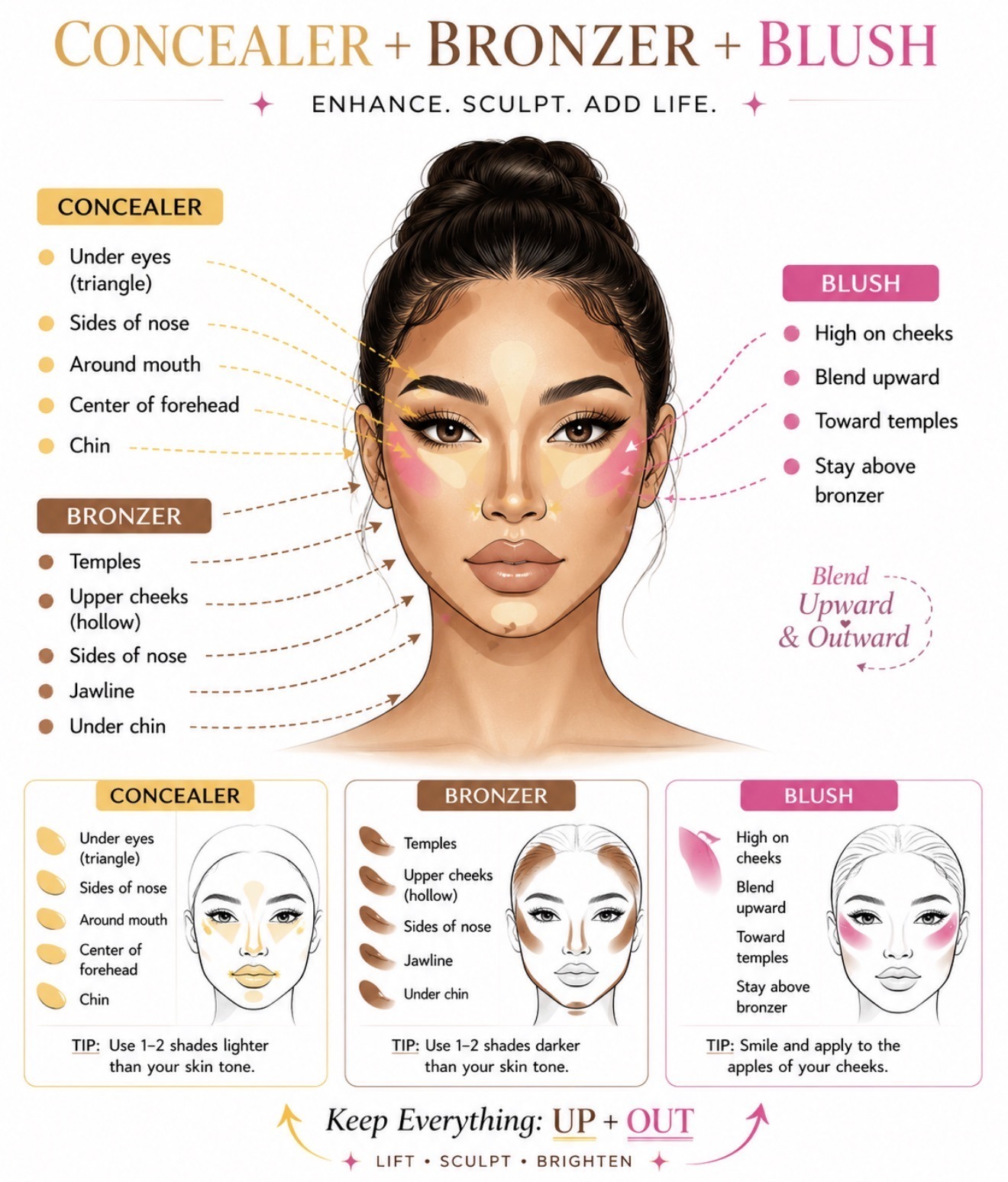
This shows the underpainting placement before blending: concealer is placed first under the eyes and through the center of the face for brightness, contour is placed next around the forehead, cheekbones, and jawline for soft shape, and blush is placed above the contour to lift the cheeks before foundation softens everything together.
Full Beat With Underpainting: What This Tutorial Teaches
Full beat with underpainting is not about hiding your face under layers of makeup. It is about placing brightness, color, and shape in a smarter order so the final look appears more blended. When concealer, contour, and blush are softened underneath foundation, the makeup can look lifted without looking striped.
In a traditional full beat, many people apply foundation first, then concealer, contour, blush, powder, bronzer, and highlighter on top. That can work, but it can also make every product sit visibly on the skin. Underpainting changes the order by placing concealer first, contour next, and blush above the contour before foundation softens everything together.
This is especially useful when you want a glam makeup look but still want the skin to look smooth. For mature skin, dry skin, textured skin, or anyone who feels makeup can turn heavy quickly, this technique can help the finished face look more natural while still giving that full beat effect.
A softer look does not mean a boring look. It means the makeup is doing its job without every layer fighting for attention. With underpainting, the brightness, shape, and color come through the foundation in a softer way, so the face still has structure, but the final result looks more blended and less harsh.
Michele’s tip: use less product than you think you need. Underpainting works best when the layers are thin enough for foundation to blend over them instead of fighting with them.
How to Do a Full Beat With Underpainting
The order matters. A full beat with underpainting works best when the skin is prepped first, the face is lightly brightened and shaped, and then the foundation is used to pull everything together. You do not need to rush. The softer the blending, the prettier the result.
Think of underpainting like building a soft outline underneath the makeup. You are not trying to create a harsh contour map. You are creating gentle brightness, shadows, warmth, and color that peek through the foundation once everything is blended together.
1. Start With Skin Prep
Begin with clean, moisturized skin. If your skin is dry, give your moisturizer a few minutes to settle before makeup. Smooth skin prep helps foundation glide over the underpainting instead of catching on dry patches.
2. Apply Primer Where You Need It
Primer does not have to cover every inch of the face. Use it where your makeup separates, fades, or settles. For many people, that is around the nose, mouth, forehead, or chin. Primer should support the look, not create another heavy layer.
3. Add Concealer First
For this underpainting style, concealer goes on first. Place it under the eyes and through the center of the face where you want brightness. Keep the layer thin so it blends smoothly underneath foundation later.
4. Add Contour Next
Contour goes on after concealer. Place it around the forehead, under the cheekbones, and along the jawline for soft shape. Blend the edges lightly so the contour gives structure without looking harsh.
5. Place Blush Above the Contour
Blush goes above the contour, higher on the cheeks, to help lift the face. Use a small amount and blend upward so the color sits softly before foundation pulls everything together.
6. Apply Foundation Over the Underpainting
Foundation should be applied gently over the blended concealer, contour, and blush. Use a sponge or brush with light pressure. The goal is to soften the underpainting, not erase it completely. If you rub too hard, the products underneath can move around.
7. Finish the Full Beat
After foundation, finish with the rest of the full beat steps: brows, eyes, lashes, mascara, setting powder where needed, highlighter, lip liner, lipstick, and final setting spray. Keep the face layers thin so the underpainting still looks smooth.
Why Underpainting Can Look Softer on Mature Skin
A full beat with underpainting can be beautiful on mature skin because it avoids some of the harshness that happens when every product is stacked on top of foundation. When contour and blush sit on top of the base, they can sometimes cling to texture, lines, or powder. When those colors are softened underneath, the face can look more diffused.
This does not mean mature skin cannot wear bold makeup. It absolutely can. The difference is placement and pressure. Mature makeup often looks better when the layers are controlled, blended, and softened. Underpainting gives you brightness, shape, and color without making the makeup feel too sharp.
If you are doing makeup over 50, try keeping the contour creamier, the blush higher on the cheek, and the foundation layer lighter than usual. You can always add more coverage only where you need it. The goal is not to cover every natural feature. The goal is to create a polished makeup look that still feels flattering.
Another reason this technique can work well for mature skin is that it lets you avoid over-powdering. Too much powder can make the skin look flat or dry. Underpainting keeps the shape underneath the base, so you can set only the areas that truly need it instead of coating the whole face.
Best for Soft Glam
Underpainting is helpful when you want glam makeup but do not want obvious contour lines sitting on top of your foundation.
Use Thin Layers
Thin layers are the secret. Too much concealer, contour, blush, or foundation can make the technique look heavy.
Blend Before Foundation
Do not wait until the end to fix harsh lines. Blend each underpainting step before your foundation goes over it.
Set Only Where Needed
If your skin is dry, avoid powdering the entire face. Set the areas that crease or move, then keep glow where it looks flattering.
Common Underpainting Mistakes to Avoid
The most common mistake with a full beat with underpainting is using too much product. Because foundation is going over the top, people often think the concealer, contour, or blush needs to be very strong underneath. That usually makes the final look harder to blend.
Another mistake is using a foundation that is too full coverage for this technique. If the foundation completely covers everything underneath, the underpainting disappears. A medium or buildable coverage foundation often works better because it lets the shape and color peek through softly.
Also be careful with powder. Powder can make makeup last, but too much powder can flatten the face and make mature or dry skin look heavier. If you need help with the correct order, visit the full makeup tutorials hub or start with skin prep before makeup.
Do not use underpainting as an excuse to skip blending. Every cream layer should be softened before the next layer goes on. If the contour is patchy before foundation, the foundation may soften it some, but it will not always fix the problem completely.
For general cosmetic safety and product hygiene, you can also review the FDA cosmetics safety page. Clean brushes, fresh products, and good habits matter just as much as the makeup technique itself.
Best Products and Tools for Full Beat With Underpainting
You do not need a huge makeup kit to try full beat with underpainting. A few basic products can work well: moisturizer, primer, concealer, cream contour, cream blush, foundation, setting powder, highlighter, lip products, and setting spray.
Cream products usually blend better for underpainting than dry powder products because they melt into the skin before foundation. A damp sponge can help soften the edges, while a brush can help place product more precisely. If your skin is textured or dry, gentle pressing usually looks better than dragging.
The biggest product rule is this: choose formulas that give you time to blend. If a contour or blush dries down too quickly, it can become patchy before foundation ever touches it. Work one section at a time and do not overload the brush or sponge.
If you are new to underpainting, start with products you already know how to blend. A technique is always easier to learn when the product formula is familiar. Once you understand the placement, you can experiment with different textures, shades, or finishes.
Simple beginner rule: if the underpainting looks a little too strong before foundation, that is okay. If it looks extremely harsh, muddy, or hard to blend, use less product next time.
When to Choose Underpainting Instead of Regular Contour
Choose full beat with underpainting when you want brightness, shape, warmth, and blush without obvious product sitting on top of the skin. This technique is especially helpful for photo makeup, glam makeup, soft evening makeup, and mature makeup looks where you want the face to look lifted but not overly carved.
Regular contour on top of foundation can still be beautiful, especially when you want sharper definition. Underpainting is better when you want the concealer, contour, and blush to look like they are coming through the skin instead of sitting on top of it.
This is also a good technique when your makeup tends to look too heavy by the end of the routine. By softening the shaping underneath the foundation, you may find that you need less product on top. That can make the finished makeup look smoother and more wearable.
Full Beat With Underpainting FAQ
What is full beat with underpainting?
Full beat with underpainting means placing concealer, contour, and blush underneath foundation so the finished makeup looks softer and more blended.
What order should I apply underpainting?
For this routine, apply concealer first, contour next, and blush above the contour. Then foundation goes over the top to soften and blend everything together.
Is underpainting good for beginners?
Yes, if you use light layers. Beginners should start with a small amount of concealer, cream contour, and blush, blend well, then apply foundation gently over the top.
Does underpainting work for makeup over 50?
Yes. Underpainting can be flattering for makeup over 50 because it softens contour and blush instead of leaving harsh product lines on top of the skin.
Do I use powder before or after underpainting?
Powder usually comes after the cream and liquid layers. For this technique, finish your cream underpainting and foundation first, then lightly set only where needed.
What foundation works best with underpainting?
A medium or buildable foundation usually works best because it softens the contour and blush without completely covering the shape underneath.
Can I use powder contour for underpainting?
Cream contour usually works better because it blends underneath foundation. Powder contour is usually better after foundation and powder, not underneath liquid foundation.
You just watched the full beat with underpainting tutorial. Go back to the main tutorial library to choose the next step in Michele’s makeup routine.
Back to Makeup Tutorials