
Eyeshadow for beginners should feel simple, soft, and easy to blend instead of overwhelming, messy, or too complicated to wear every day.
Eyeshadow for Beginners – 5 Best Tips for an Easy Eye Look
A pretty eye look does not have to use ten shades. With the right colors, brushes, and placement, beginner eyeshadow can look polished without being difficult.
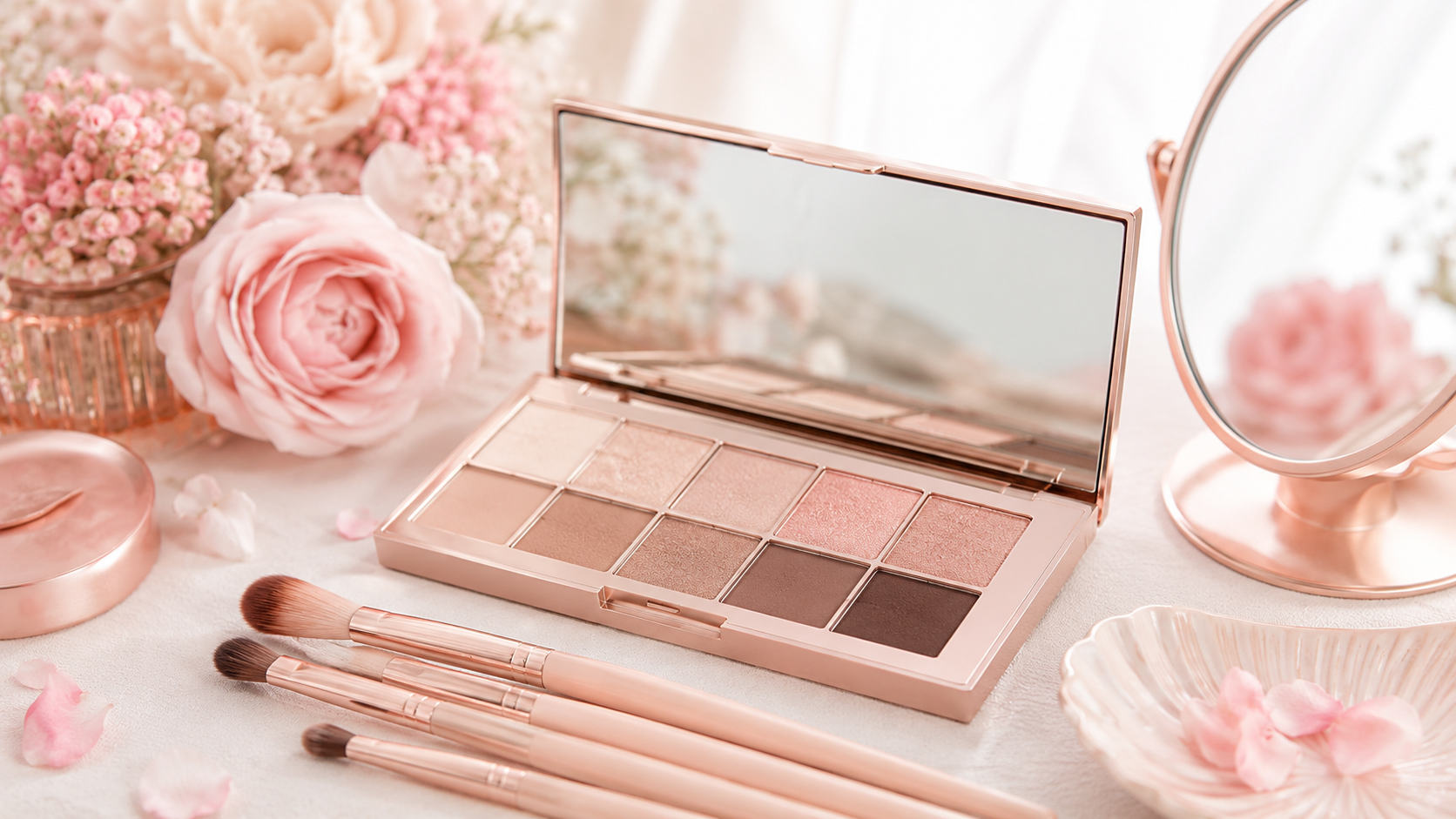
Eyeshadow for Beginners: Start With Neutral Shades
Eyeshadow for beginners is easiest when you start with soft neutral shades. Beige, taupe, champagne, soft brown, rose, and warm matte shades are usually easier to blend than very dark, bright, or glittery colors.
You do not need a huge palette at first. A small palette with a light shade, a medium shade, and a slightly deeper shade can create a simple everyday eye look. Once that feels easy, you can add shimmer, liner, or deeper colors.
Chele’s beginner eyeshadow rule
Start with one or two shades before trying a full eye look. If the blend looks soft, the makeup will look prettier even when the routine is simple.
The Best Eyeshadow for Beginners
The best eyeshadow for beginners is not always the most colorful palette. It is the one you can actually use without feeling confused. Look for shades that are close to your skin tone, easy to blend, and wearable for everyday makeup.
Powder eyeshadow is usually the easiest place to start because it is simple to build slowly. Cream shadow can be beautiful too, but it may crease faster if you use too much or skip setting the lid.
A light matte or satin shade can brighten the lid and soften the whole look.
A soft brown or taupe can create shape without looking too dark.
Soft edges make eyeshadow look intentional instead of patchy.
Use shimmer on the lid or inner corner, not everywhere at once.
Use the Right Brushes for Eyeshadow
A beginner does not need a huge brush set. A flat brush and a fluffy blending brush can do a lot. The flat brush places color on the lid, and the fluffy brush softens the edges.
If you only have one brush, choose a soft blending brush. You can use it to apply a light wash of color and blend at the same time. Clean brushes also matter because leftover dark shadow can make a soft look turn muddy.
Where to Put Eyeshadow
Placement is what makes eyeshadow easier. Start with a light shade on the lid, then add a medium shade slightly above or into the crease. Blend the edge so there is no harsh line.
If your eyes are hooded or deep-set, keep your eyes open while checking placement. This helps you see where the color shows when your face is relaxed.
How to Blend Without Making a Mess
Blending does not mean rubbing the shadow all over the eye. Use small circles or windshield-wiper motions with a light hand. If the color disappears, add a little more. If it gets too dark, blend the edge with a clean brush.
When learning eyeshadow for beginners, build slowly. It is easier to add more shadow than to remove too much.
Simple One-Shadow Eye Look
A one-shadow look is one of the easiest ways to practice. Choose a soft brown, taupe, rose, or peach shade. Sweep it across the lid, then blend the edge upward until it looks smooth.
Add mascara and the look is done. This is a great everyday option when you want your eyes to look finished without doing a full glam routine.
Mascara helps the eyes look defined after soft shadow.
Tap off extra shadow before putting the brush on your eye.
Matte shades are easier for blending; shimmer is easier on the lid.
Practice with neutrals first so mistakes are easier to soften.
Common Eyeshadow Mistakes Beginners Make
- Starting with shades that are too dark.
- Using too many colors at once.
- Skipping blending around the edges.
- Dragging shimmer too high into the crease.
- Using dirty brushes with leftover dark shadow.
- Applying more product before softening what is already there.
How to Choose a Beginner Eyeshadow Palette
A good beginner palette should have shades you understand. Look for a light matte shade, a medium transition shade, a deeper brown, and one or two soft shimmers. You do not need every color of the rainbow to learn.
Eyeshadow for beginners works best when the shades are not too powdery, too glittery, or too hard to blend. A simple neutral palette can teach you more than a complicated colorful one.
How to Keep Eyeshadow Looking Smooth
If your eyelids get oily, use a small amount of eye primer or a thin layer of concealer set with powder before shadow. This can help shadow grip better and stay smoother.
Do not overload the lid with too much product. Thin layers, soft blending, and clean brushes help eyeshadow look smoother and more polished.
Final Thoughts on Eyeshadow for Beginners
Eyeshadow for beginners does not need to be dramatic or complicated. Start with soft neutral shades, use fewer colors, blend the edges, and finish with mascara.
Once you learn where to place color and how to soften the blend, eyeshadow becomes much easier. A simple eye look can still be pretty, polished, and confident.
For general cosmetic safety information, you can also visit the official FDA cosmetics information page .