
Bronzer vs contour can feel confusing when you are learning makeup because both products add shape, but they do very different jobs on the face.
Bronzer vs Contour – 5 Best Tips to Know the Difference
Bronzer adds warmth and life back to the skin, while contour creates shadow and structure. Once you understand that difference, placement becomes much easier.
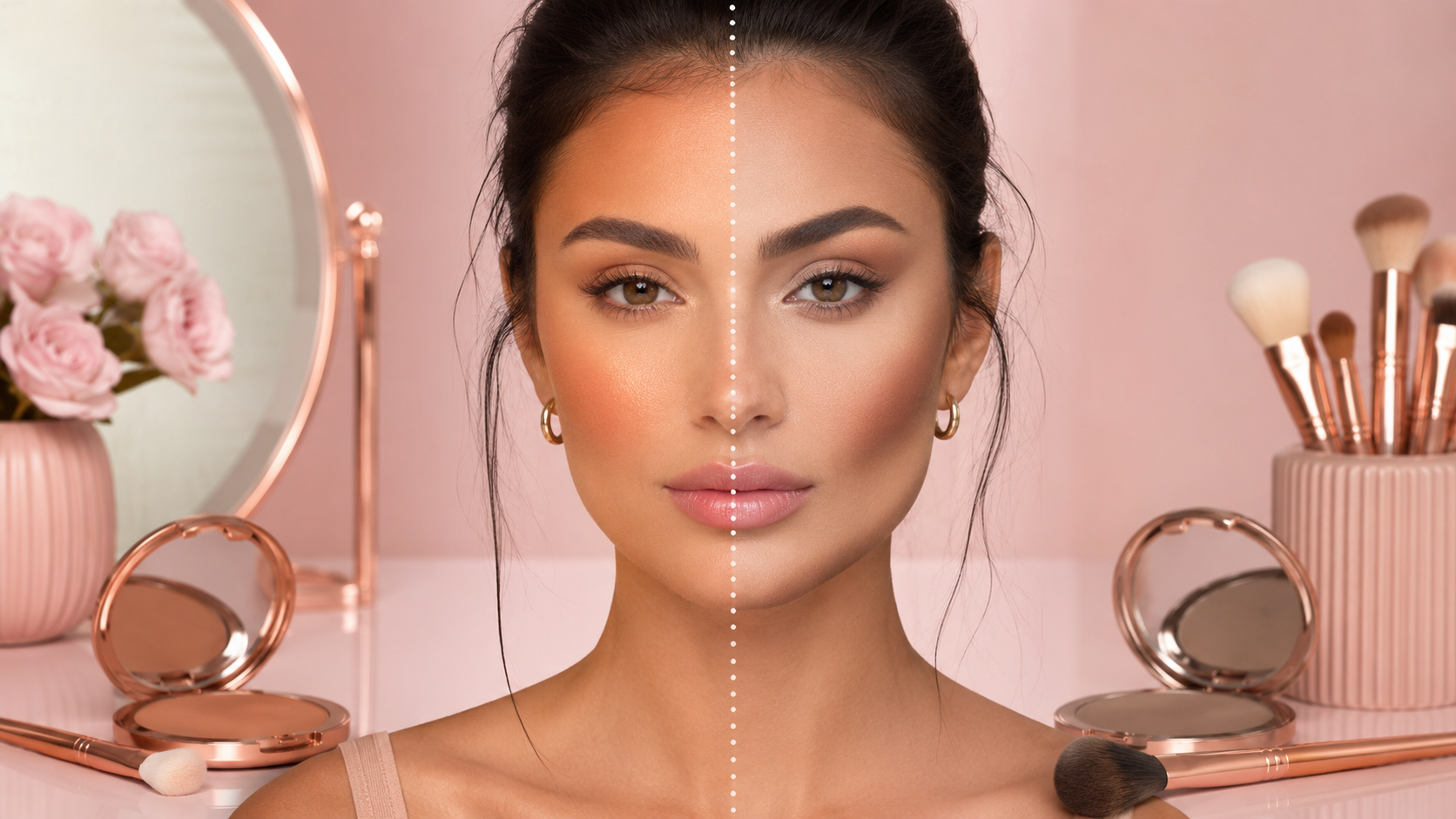
Bronzer vs Contour: What Is the Difference?
Bronzer vs contour is one of the most common beginner makeup questions because both products can go near the cheeks, forehead, and jawline. The difference is the purpose. Bronzer makes the skin look warmer and sun-kissed. Contour makes certain areas look more shadowed or sculpted.
If you use bronzer where contour should go, the face can look too warm or muddy. If you use contour where bronzer should go, the face can look dull or gray. The easiest way to remember it is this: bronzer brings warmth, contour creates shape.
Chele’s bronzer and contour rule
Bronzer should look like warmth from the sun. Contour should look like a natural shadow. If the shade or placement does not match that idea, it may look off.
The Best Way to Understand Bronzer vs Contour
The best way to understand bronzer vs contour is to look at shade first. Bronzer is usually warmer, with golden, peachy, tan, or warm brown tones. Contour is usually cooler or more neutral because real shadows are not orange.
That does not mean contour has to look gray. It just means it should be less warm than bronzer. For beginners, the safest contour shade is usually only a little deeper than your skin tone and soft enough to blend.
Use bronzer where the sun naturally hits: forehead, cheeks, and sometimes the nose.
Use contour where you want soft structure, like under cheekbones or along the jaw.
Bronzer is warmer. Contour is cooler or more neutral.
Bronzer sits higher and wider. Contour is more targeted.
Where to Place Bronzer
Bronzer usually looks best where the face would naturally catch sun. For many people, that means around the outer forehead, the tops of the cheek area, and sometimes lightly across the bridge of the nose.
Keep bronzer soft and blended. If you place it too low under the cheekbone, it can pull the face down or look muddy. A fluffy brush helps diffuse the color so the warmth looks natural instead of striped.
Where to Place Contour
Contour is more targeted than bronzer. It usually goes under the cheekbone, along the jawline, near the hairline, or softly down the sides of the nose if you want that look.
The key is to use less than you think. Contour should not be a harsh line. Apply a small amount, blend upward or outward, and check the face in natural light before adding more.
Can You Use Bronzer and Contour Together?
Yes, you can use both, but beginners do not have to. If you use both, contour first with a small amount where you want shadow, then add bronzer slightly higher or wider to warm the face.
This is where bronzer vs contour becomes easier to see. Contour shapes the face first, and bronzer brings the color back. They should blend together, but they should not sit in the exact same place.
Powder vs Cream Bronzer and Contour
Powder products can be easier for beginners because they are simple to control and build slowly. Cream products can look beautiful and skin-like, but they may take more blending.
If your skin is dry, cream products may look softer. If your skin is oily or you want something quick, powder may feel easier. There is no perfect rule for everyone; the best product is the one you can blend well.
Harsh lines make both bronzer and contour look obvious.
Start with bronzer first if contour feels intimidating.
Use a fluffy brush for bronzer and a smaller brush for contour.
Choose soft, buildable shades instead of very dark ones.
Beginner Mistakes With Bronzer and Contour
- Using orange bronzer as contour.
- Putting contour too low on the cheek.
- Using too much product at once.
- Not blending the edges enough.
- Choosing shades that are too dark for your skin tone.
- Using the same brush for everything without blending between steps.
Which One Should Beginners Buy First?
If you are brand new, bronzer may be easier to start with because it warms up the face and looks more forgiving. A soft bronzer can make the skin look healthier without requiring perfect placement.
Contour is helpful if you specifically want more structure, but it is not required for everyday makeup. Many simple makeup looks use bronzer and blush without contour at all.
How to Choose the Right Shade
For bronzer, choose a shade that looks like a natural warm tan on your skin. For contour, choose a shade that looks like a soft shadow. Avoid anything too orange, too gray, or too deep to blend easily.
When deciding bronzer vs contour, think about the result you want. If your face looks flat and needs warmth, reach for bronzer. If you want more sculpting or shadow, reach for contour.
Final Thoughts on Bronzer vs Contour
Bronzer vs contour gets much easier once you stop thinking of them as the same product. Bronzer warms the face. Contour shapes the face. They can work together, but they do not have to.
Start with soft shades, light layers, and gentle blending. Once you understand placement and purpose, both products can make your makeup look more finished without looking harsh.
For general cosmetic safety information, you can also visit the official FDA cosmetics information page .